



Abroad


Zaqy Mohamad visits Saudi Arabia & Egypt, asks for more Hajj places & visits Gaza border crossing
Singapore has contributed S$25 million to those in need in Gaza over 11 tranches.
November 14, 2026, 03:49 PM
Image via Zaqy Mohamad/Facebook

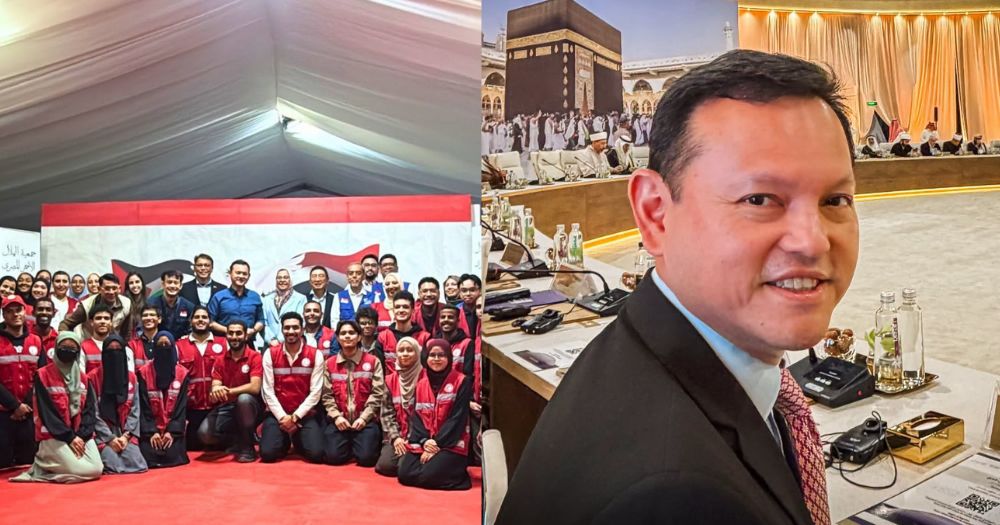
 Acting Minister-in-Charge of Muslim Affairs Zaqy Mohamad has visited Saudi Arabia, where he discussed preparations for Hajj 2027, and Egypt, where he visited the Rafah border crossing with Gaza and met with humanitarian organisations.
On Nov. 13, he spoke to the press about his visit, answering questions about Singapore's Hajj allocation as well as ongoing relief efforts in Gaza.
Hajj allocation
Zaqy began by acknowledging that, for many Singaporean Muslims, performing Hajj is a lifelong dream that some have saved for years.
Others have waited a very long time for their turn, and their hope for a place becomes ever more precious as they grow older.
Zaqy said that, after several years of waiting, he had been able to perform his Hajj earlier in the year and understood what the journey meant to the Singaporean Muslim community and their families.
“Every Hajj allocation is more than just a number. For me, it is also someone's hopes, someone's prayers, and someone's years of waiting.”
Same number of Hajj places as previous years
He said that for Hajj 2027, Singapore had been allocated 900 places, which is the same number it has been assigned for five consecutive seasons.
While many had been hoping for more, Saudi Arabia allocated Hajj places based on an international formula of 0.1 per cent of each country's Muslim population, and Singapore's allocation was in line with other countries.
While visiting Jeddah, Zaqy met with Saudi Arabia's Minister of Hajj and Umrah, Tawfiq al-Rabiah, and made Singapore's case for more places in 2028.
But also said that he understood Saudi Arabia's concerns about keeping pilgrims safe.
Meanwhile, Zaqy said that Singapore was looking to make Hajj more accessible, doing what it could within its quota places.
For 2027, there would be more affordable packages, including a shorter 18-day itinerary.
He said that MUIS was helping pilgrims meet the enhanced medical requirements.
For someone in their 70s and above, another year’s wait can make a big difference, so MUIS has given some priority to applicants aged 70 and above.
“Our hope is simple. We want to help most Singaporeans fulfil their Hajj aspirations safely and with peace of mind.”
Humanitarian efforts
Zaqy then spoke about his visit to Egypt, especially to Cairo and the Rafah border.
He said that while at the border, "you can't help but think about the suffering of the families in Gaza, as it felt very close."
He said that many had lost homes and loved ones, especially during recent heavy rains, which have flooded makeshift shelters.
He also related stories told to him while visiting the Palestinian hospital in Cairo, where he spoke to several of the families there, hearing in emotional terms the suffering that they have gone through.
Zaqy said the suffering of Gazans should not be something that “we simply get used to.”
Big-heartedness
Zaqy praised the big-heartedness of Singaporeans he has interacted with over the years, saying that, through the “generosity of our people and our humanitarian organisations”, Singapore has given S$25 million over 11 tranches over the last three years.
He said that it would be important to continue to get help to families who needed it and that access to Gaza has improved since earlier in the year, while warning that it still remained challenging.
He spoke about the new humanitarian effort for Relief efforts in Gaza called SG for Humanity, which brings together four NGOs: Rahmatan Lil Alamin Foundation (RLAF), Mercy Relief, Singapore Red Cross, and Humanity Matters.
The aim of SG for Humanity was to strengthen cooperation with the Egyptian Red Crescent (ERC).
The RLAF has signed an agreement to provide essential supplies, hot meals, shelter assistance, and learning spaces for children until Ramadan next year.
It was also explored how Singapore medical professionals could contribute more, and he met with relevant authorities and ministries to try to make some of these efforts possible on the ground.
He complimented the ERC, which had been able to advise Singaporean NGOs as to what worked and what didn't, highlighting the value of the SG for Humanity network.
Ultimately, he said, the measure of success was not about how much aid Singapore sent, but how much aid actually reached the people in Gaza and those displaced in Egypt or in Cairo.