



Abroad


Trump, Xi & Putin meet at APEC this year. Why are some people worried?
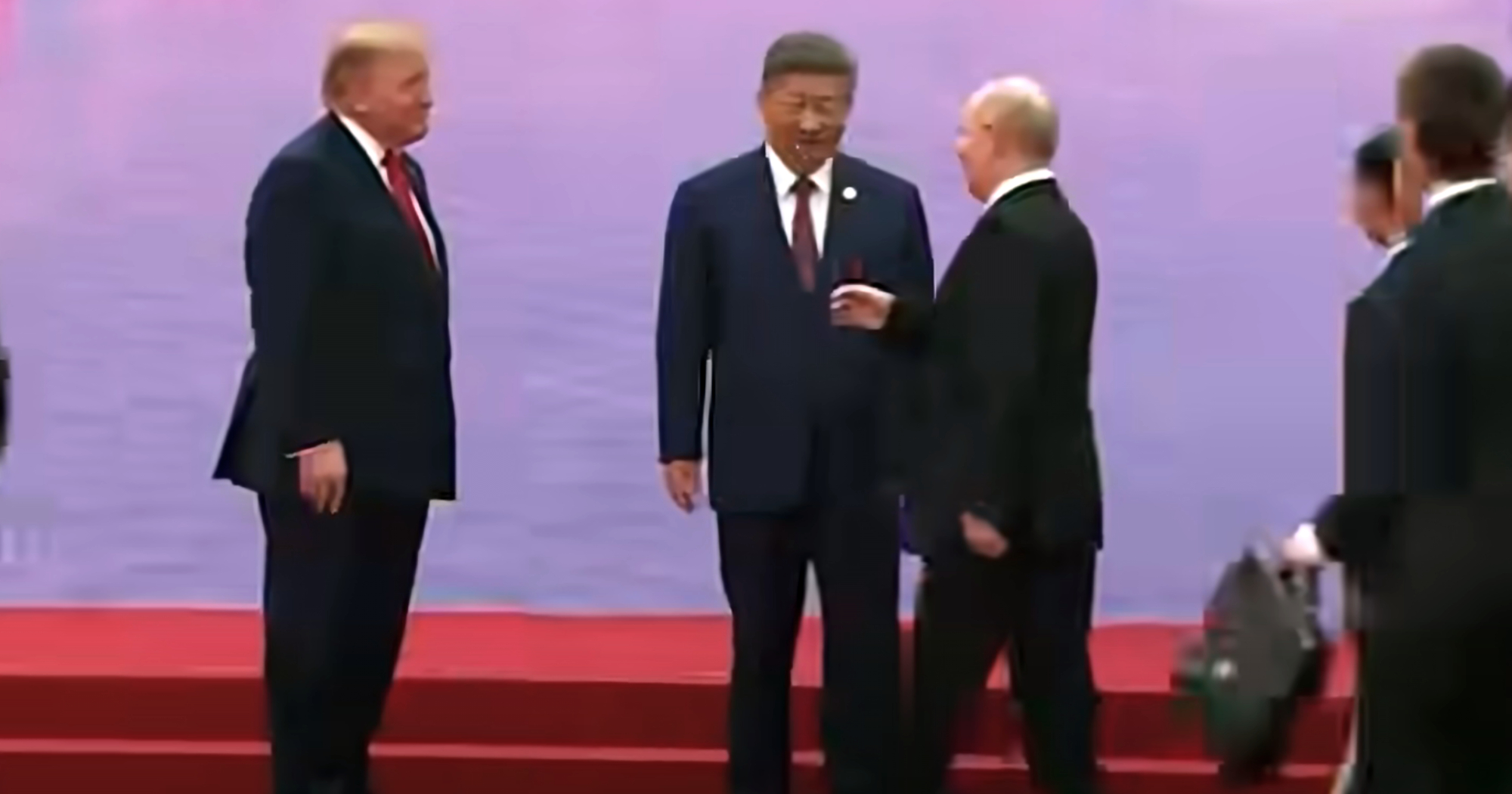
This will be the first time Trump, Xi, and Putin have attended a summit together since 2019.
November 19, 2026, 03:33 PM
Photo via Kremlin


The 33rd Asia-Pacific Economic Cooperation (APEC) summit takes place in China's tech boomtown, Shenzhen, from Nov. 18 to 19.
Traditionally, APEC summits have been a place to take stock of and try to enhance the global trading order, with APEC’s origins stemming from a drive to increase trade across the 12 economies that founded it in 1989.
Now the grouping is 21 member economies strong, includes Hong Kong and Chinese Taipei, and by its own account has been instrumental in increasing trade across the Pacific, and improving livelihoods along the way.
But nearly four decades in, attitudes to global free trade have shifted, with some major superpowers believing more in unilateralism.
Tariffs and relevance of APEC
The prime example is the United States under president Donald Trump, who, rather than attempt to lower tariffs across the board, levelled eye-watering tariffs at almost every country on the face of the earth.
Meanwhile, countries like China, which in the 1990s fought to be part of the grouping, continue to advocate for the multilateral rules-based order, especially when it comes to trade, but are regularly accused of trade indiscretions, such as dumping excess production on partner countries.
But APEC maintains its relevance despite this, because it presents an opportunity for world leaders to meet without needing to engage with the same level of formality as an official visit.
A perfect example exists in the form of the 2023 APEC summit in San Francisco.
Relations between the U.S. and China were especially frosty at the time, as was the relationship between then-president Joe Biden and China president Xi Jinping.
Frosty ties
Under the Biden administration, an American president did not conduct a state visit to China or vice versa.
It was the first time in at least 20 years that this occurred.
But Biden’s term was clouded by the pandemic and associated travel bans.
There was a bilateral virtual summit between Biden and Xi in November 2021, but ultimately a face-to-face state visit never occurred.
State visits are the preserve of careful diplomacy, with participants attempting to craft them so that the optics of the visit do not come across badly for their domestic audiences.
The perception of a trip to a foreign capital, if not managed properly, can go from a leader enjoying the hospitality of a country to a supplicant begging for favour in astoundingly little time.
Sideline meetings
Multilateral meetings solve some of these problems, and nowhere was this clearer than the 2023 APEC Summit in San Francisco.
Far from Washington, D.C., and the White House, the city served as a relatively neutral backdrop for Xi to be received in the U.S., while not visiting the seat of power.
Bilateral meetings on the sidelines of summits are not rare: APEC 2023 was not even the first time Biden and Xi met at a summit, they met in Bali for the G20’s 2022 summit.
But the APEC 2023 meeting between the two men was more than a quick hour in a secure room in an exhibition centre.
It was a longer, more involved visit, and Biden and Xi even got the chance to talk about cars.
The meeting demonstrated how multilateral gatherings can create opportunities for diplomatic engagement even when relations between major powers are strained.
Could 3 leaders reshape the world order?
APEC 2026 sees another occasion, very different in shape, but taking advantage of the same type of opportunity.
It will see the presidents of China, Russia, and the U.S. together in the same venue for the first time since 2019.
Ever since then, the aforementioned pandemic and then sanctions and travel restrictions imposed on Putin as a result of the 2022 invasion of Ukraine, have prevented him from attending events like the G20 and APEC.
By a quirk of fate, the presidents of these three countries are the same men in 2026 as they were in 2019.
Trump is notably warmer towards Putin than almost any other U.S. politician, and while he has called China a rival on numerous occasions, he has often been effusive in praising Xi, especially when he visited Beijing in May 2026 and when Xi reciprocated in September 2026.
But some observers are cautious about what the trilateral meeting portends, even giving it the ominous moniker “The New Yalta”.
The Yalta Conference was a famous meeting that took place in February 1945 in Crimea, and it brought together the U.S. president Franklin D. Roosevelt, British prime minister Winston Churchill, and Soviet leader Joseph Stalin.
The conference is remembered as effectively defining the shape of the post-World War II world, drawing up the borders of what would become the Cold War.
The concern is that the three leaders could reach agreements on major international issues without involving the countries most directly affected by them.
For instance, Ukraine and Taiwan have reason to be concerned about any understanding that might affect their security or future.
More broadly, such a meeting raises questions about whether the world's most powerful countries could carve out spheres of influence, leaving smaller countries with little say in decisions that affect them.
What could the meeting achieve?
But as the South China Morning Post observes, such a narrative sits at odds with how China says it perceives its own place in the world.
China has, on numerous occasions since 2025, appeared to be taking up the mantle of the promoter of a multilateral world and a rules-based order.
There is also not the clear unifying purpose that the original Yalta participants had to bring them together.
SCMP provides a more plausible explanation for the arrangement, quoting Cui Hongjian of the Beijing Foreign Studies University.
Cui said the motivation was to stabilise major-power relations and ease suspicions that may arise when they engage others bilaterally.
But there is clearly some desire, especially on the part of Trump, to close ranks a little bit when it comes to global influence.
He has repeatedly referenced the idea of a G2 grouping of the U.S. and China, seeking more direct influence and interaction between the two countries.
It implies that he does not believe there is as much need to include the whole host of multilateral partners.
Still, regardless of how much might be achieved during APEC and at the U.S.-China-Russia trilateral meeting, what is clear is that Trump sees value in engaging more with China’s president.
APEC will be the third meeting between the pair in 2026, with one more meeting due in Miami this year during the G20 summit in December.