



Branded


S'pore youths take on policymaking. How hard could it be… right?
Turns out, preparing for the debates was far from straightforward.
November 24, 2026, 06:01 PM
Photos from REACH and Tiana Quek/ Mothership.
I've watched Members of Parliament debate national issues before.
But this time, the people discussing Singapore's future weren't elected politicians.
They were mostly students, hailing from ITE, JCs, polytechnics and universities, alongside NSFs. The part that caught me by surprise was how some of them were just a few years younger than me.
I was attending the Singapore Model Parliament (SMP), a three-day programme organised by REACH that gives youths a taste of policymaking and parliamentary debates.
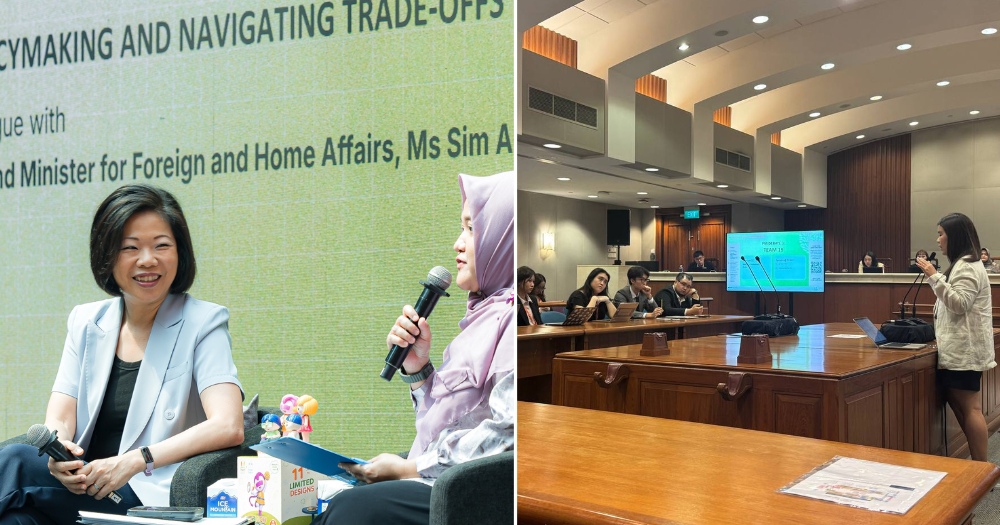
On the final day, participants put what they had learnt to the test in a simulated parliamentary debate at Parliament House.
And judging by what I witnessed, these young Singaporeans certainly had plenty to say.
From social mobility and meritocracy to rough sleeping, participants tackled issues that even experienced policymakers grapple with.
There were speeches, rebuttals and questions from opposing teams. Some spoke confidently, while others quickly challenged proposals and identified potential gaps.
But what did they actually take away from the experience?
I spoke to three participants to find out.
A taste of Parliament
SMP brought together youths from different educational backgrounds to develop proposals under 2 debate motions: "Securing Singapore's resilience in an age of disruption" and "Strengthening social cohesion for a changing Singapore".
Over three days, participants attended workshops which gave them insights to Parliamentary procedures, engaged with policymakers, including Minister for Digital Development and Information Josephine Teo and Second Minister for Foreign Affairs and Home Affairs Sim Ann, and prepared for a simulated parliamentary debate.
On the final day, I watched them present and defend their proposals on a few key issues society faces.
Under a motion on social mobility and meritocracy, one debate examined whether alumni affiliation privileges in school admissions contributed to inequality.
Another looked at how to help youths sleeping rough, while considering family issues, legal constraints and whether the proposed solutions could work in practice.
While the debates were simulated, the issues being discussed were very much real.
And as I discovered from speaking to the participants, preparing their arguments was far from straightforward.
Stepping into unfamiliar territory
For 21-year-old Naayla Precious, a Higher Nitec in Accounting student at ITE College West, SMP was an opportunity to explore her interest in history and how politics shaped it.
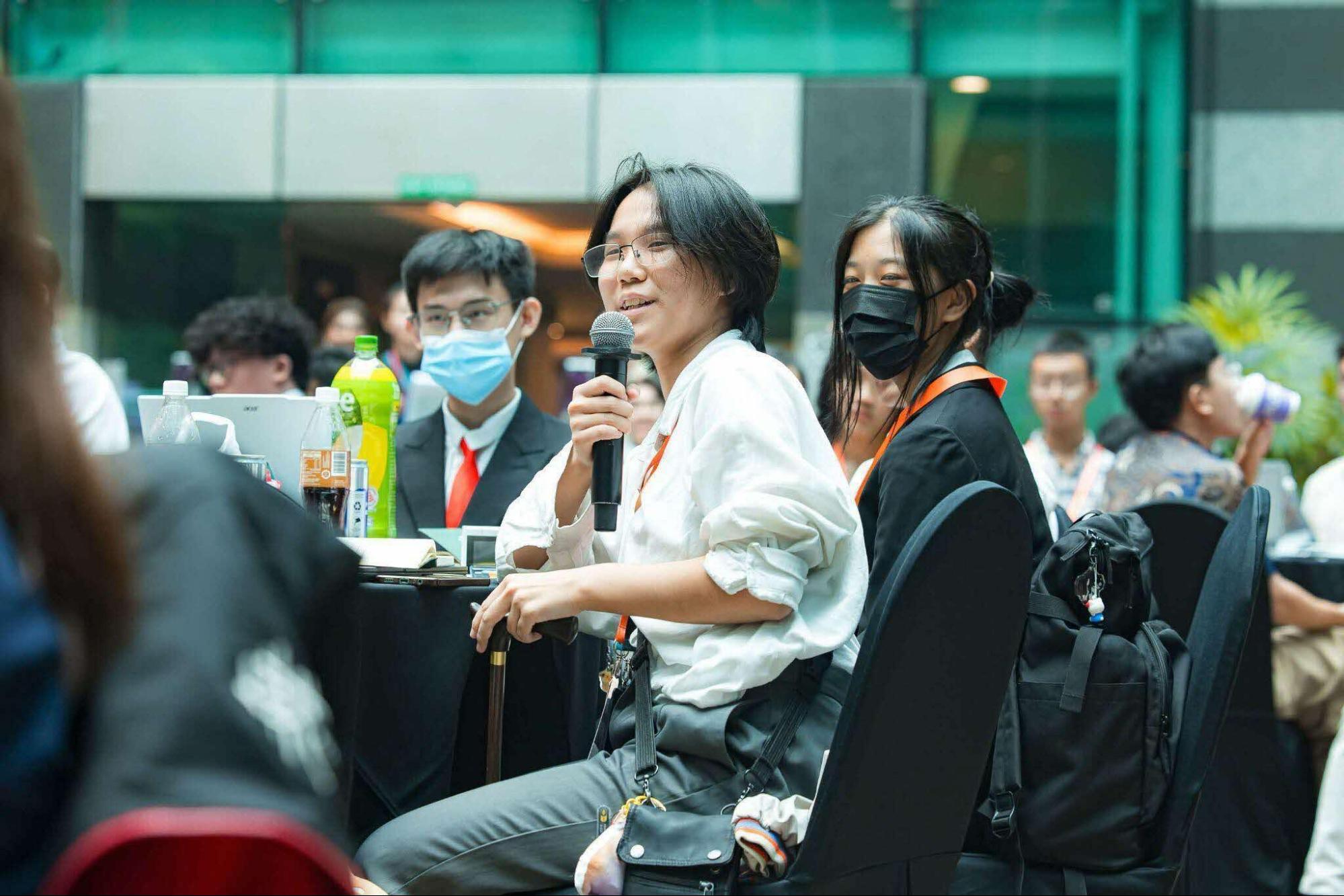 Photo from REACH.
But stepping into Parliament for the first time was intimidating.
Naayla recalled being impressed by the confidence and knowledge of the other participants, and particularly how well-prepared they were during the debates.
"There is not one person [whom] I came across at the event itself that didn't strike me as a really capable person to speak, debate, even," she said.
While she initially felt intimidated, Naayla also came to appreciate how different perspectives could contribute to discussions.
During one workshop, she was tasked with arguing in favour of AI adoption, despite having reservations about the technology herself.
Struggling to support a position she did not agree with, Naayla was encouraged by a facilitator to consider how her concerns could offer her teammates another perspective to work with.
As Naayla recalled the facilitator explaining, "Because of your viewpoint, you could offer actual counterpoints and something that the other teammates can work with."
The experience showed her how differing views could help the team consider issues from different angles and develop a more well-rounded proposal.
Policymaking is harder than it looks
For 22-year-old Irfan Muhtaram Bin Muhamad Yusof, a political science student at the National University of Singapore, SMP was an opportunity to experience something he had previously studied in theory.
Since he was 12, Irfan had dreamt of becoming a Member of Parliament (MP), imagining himself delivering speeches in Parliament while his mother watched on television.
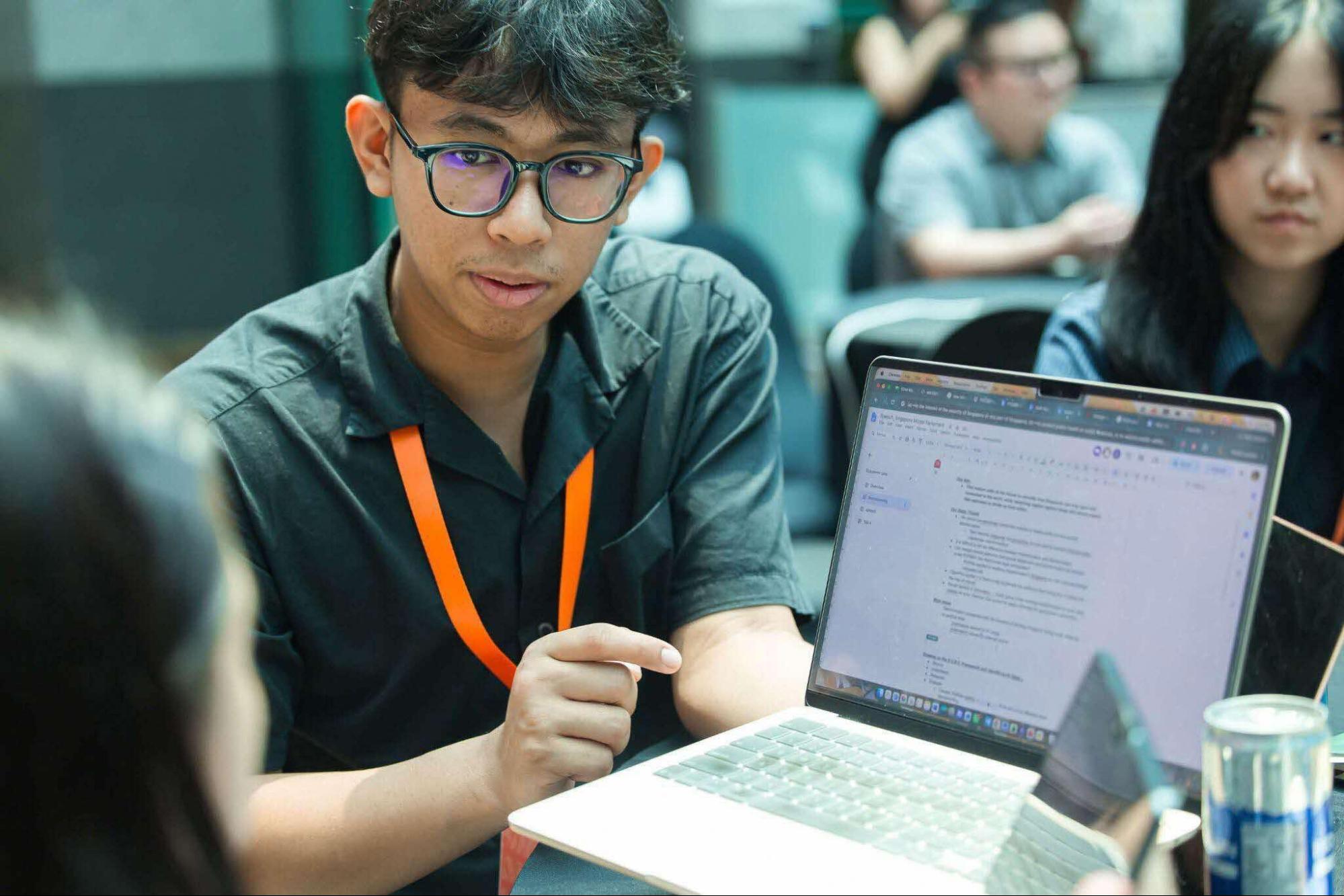 Photo from REACH.
But stepping into a simulated version of the role made him realise just how much responsibility it involved.
"When you put yourself in the shoes and you really try, it's actually a huge pressure and sort of a burden on you," he said.
"I think I would go crazy. The pressure would be insane."
Despite this, the experience reinforced his interest in contributing to Singapore's future.
"I think it has inspired me to continue," he said, adding that he hoped to participate in more forums and dialogues to explore how he could contribute to Singapore in the future.
Beyond SMP, Irfan's perspective on policymaking was also shaped by helping his mother run their family's hawker stall, particularly during the Covid-19 pandemic.
He said changes in their local town council area had caught his family off guard, prompting them to approach their MP for clarification.
He also reflected on how assistance measures he had heard about did not seem to ease his family's difficulties as much as expected.
"Theoretically, it should have alleviated us, but it didn't help so much," he said.
His experience at the hawker stall showed him how policies could affect families on the ground, complementing what he learnt through SMP about the challenges of balancing competing needs.
"I think it's quite hard to say, almost impossible to say that there will be no trade-offs in any policy," he said.
Together, both experiences gave him a fuller appreciation of the impact of policies and the considerations involved in developing them.
'It's like a Venn diagram that keeps on being a Venn diagram'
For 19-year-old Rohini d/o Terence, an Early Childhood Development & Education student at Ngee Ann Polytechnic, SMP began as a spontaneous "side quest".
Having previously participated in Model United Nations and Model ASEAN programmes, she wanted to learn more about how Singapore approached policymaking.
SMP exposed her to issues beyond her usual field of study, including economic competitiveness and social cohesion.
But what stood out was working with participants from different educational backgrounds.
While Rohini tended to approach policies from a humanitarian perspective, her teammates, who came from universities, polytechnics and National Service, brought different insights from fields such as economics and politics.
She likened her perspective to travelling down a single, one-way road.
After interacting with other participants, she found herself considering many more viewpoints.
"It really became two, three, even a whole highway at this point," she said.
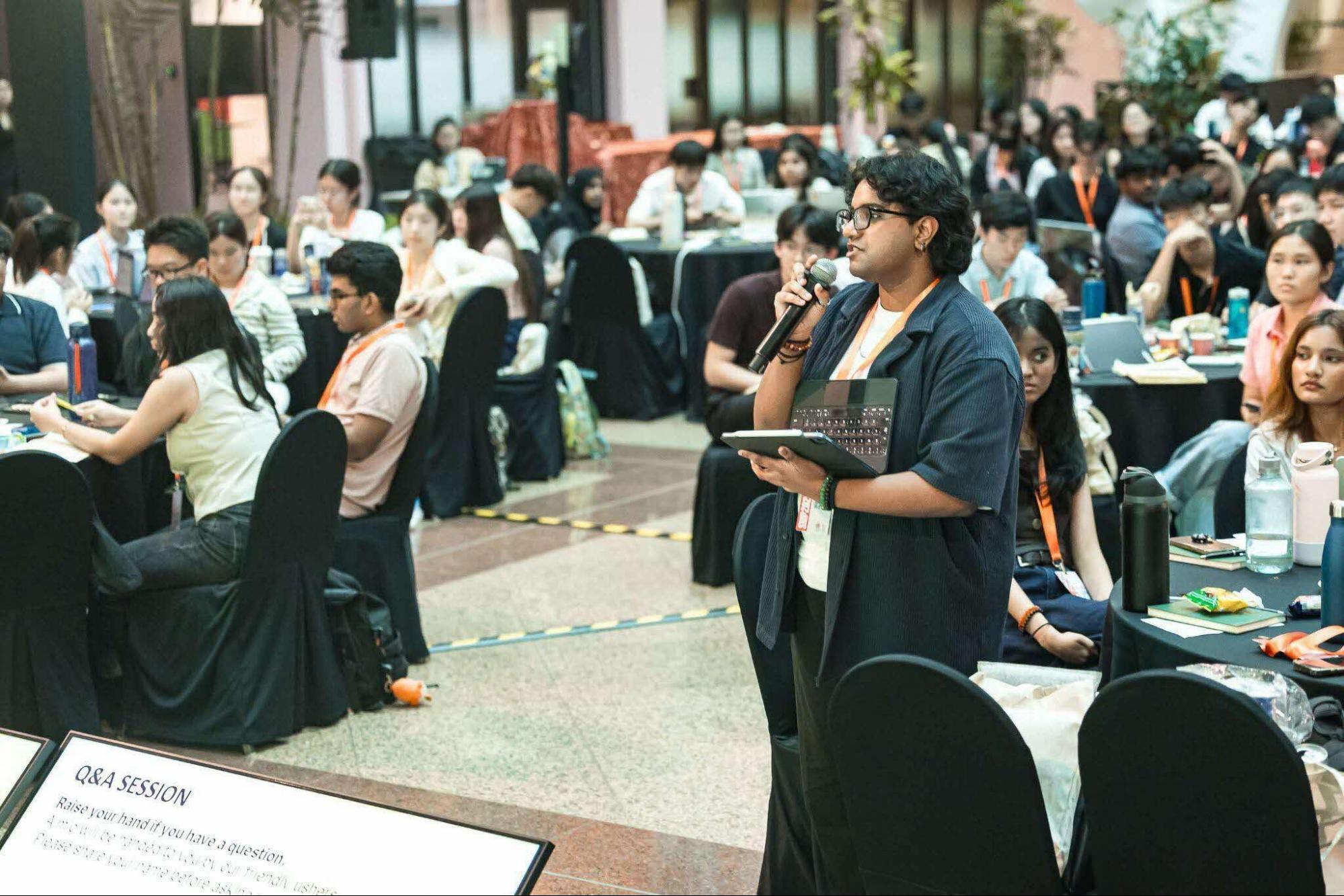 Photo from REACH.
The complexity became especially apparent when her team had to consider Singapore's economic resilience, competitiveness and regional connections in developing its proposal.
"Seeing the amount of intersection between everything, it's like a Venn diagram that keeps on being a Venn diagram," she said.
"How am I supposed to come up with something that makes sure that all of us win in the first place?"
Drawing on her previous Model UN experience, Rohini found that SMP offered a different approach to debate, with discussions encouraging participants to collaborate and work towards common ground.
What does all this mean for S'pore's future?
By the end of SMP, I found myself thinking less about the participants' ages and more about the different experiences they had brought into the room.
Some were familiar with political discussions, while others were stepping into unfamiliar territory.
But they had all spent around 2+ weeks grappling with issues that affected Singaporeans beyond themselves.
And that was something I found encouraging.
For Rohini, the experience reinforced her belief in lifelong learning.
"Go for it. Sign up, just sign up, like, honestly. Take a shot in the dark," she advised other youths.
"You may think that you don't have the knowledge or educational background of it, but that's the whole point of it."
Naayla similarly encouraged youths to embrace unfamiliar experiences, while Irfan hoped more young Singaporeans would take an active interest in national issues.
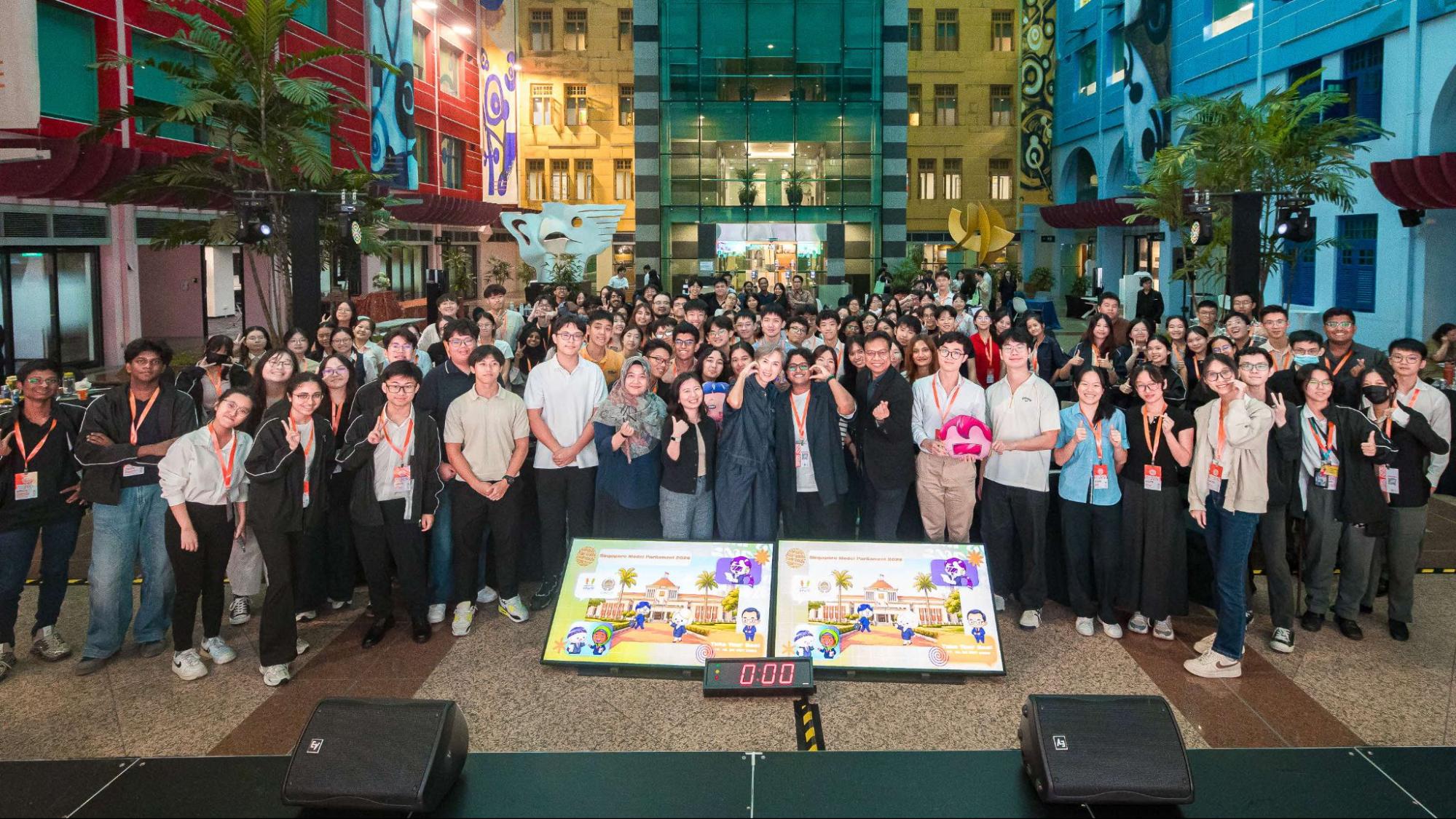 Photo from REACH.
As I watched these young Singaporeans debate the country's future, I was reminded that the responsibility of shaping Singapore will eventually fall to their generation.
They may not have all the answers now.
But seeing them take the initiative to learn, challenge ideas and think about the communities around them, made me feel a little more hopeful about what comes next.
And perhaps that's a good place to start.
This branded article by REACH made this writer hopeful about the future of our little red dot.