



Parliament


I don't take Haaretz very seriously: SM Shanmugam, WP's Fadli Fawzi clash over meeting with Israeli officials
A tense exchange.
November 04, 2026, 04:40 PM
Images via MDDI/YouTube

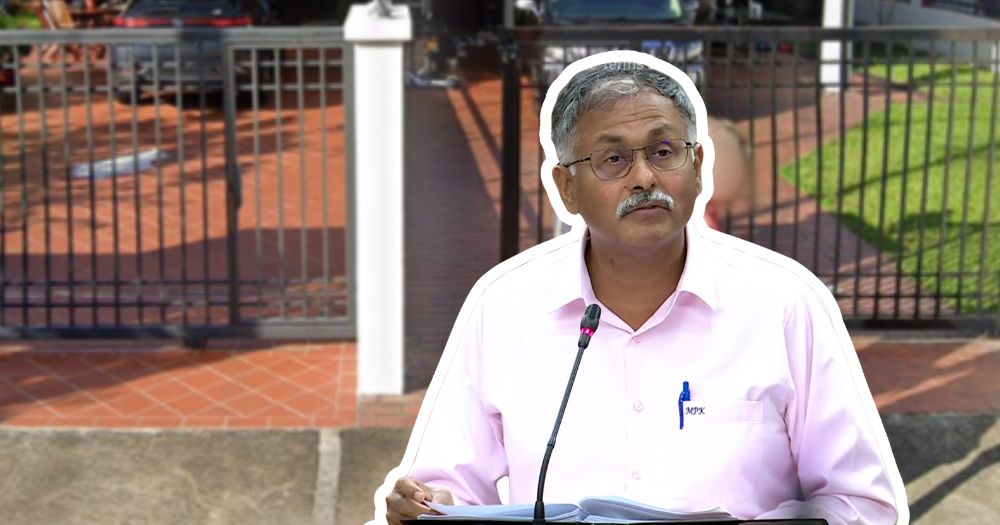
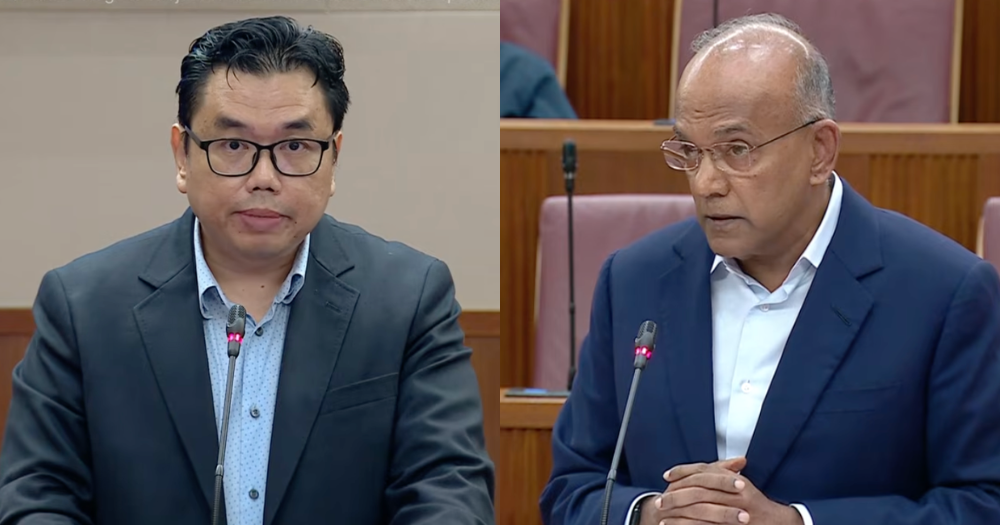
 A tense exchange occurred between Senior Minister K Shanmugam and Workers' Party's Member of Parliament Fadli Fawzi in parliament on Nov. 4, over a recent meeting between the Singapore government and Israeli officials.
Fadli, in a personal explanation time in parliament, addressed written questions he previously submitted asking SM Shanmugam about the meeting, as well as the senior minister's subsequent replies.
Background
On Oct. 7, Fadli asked whether, during a recent meeting with Israeli officials, Singapore addressed illegal settlements and settler violence in the West Bank.
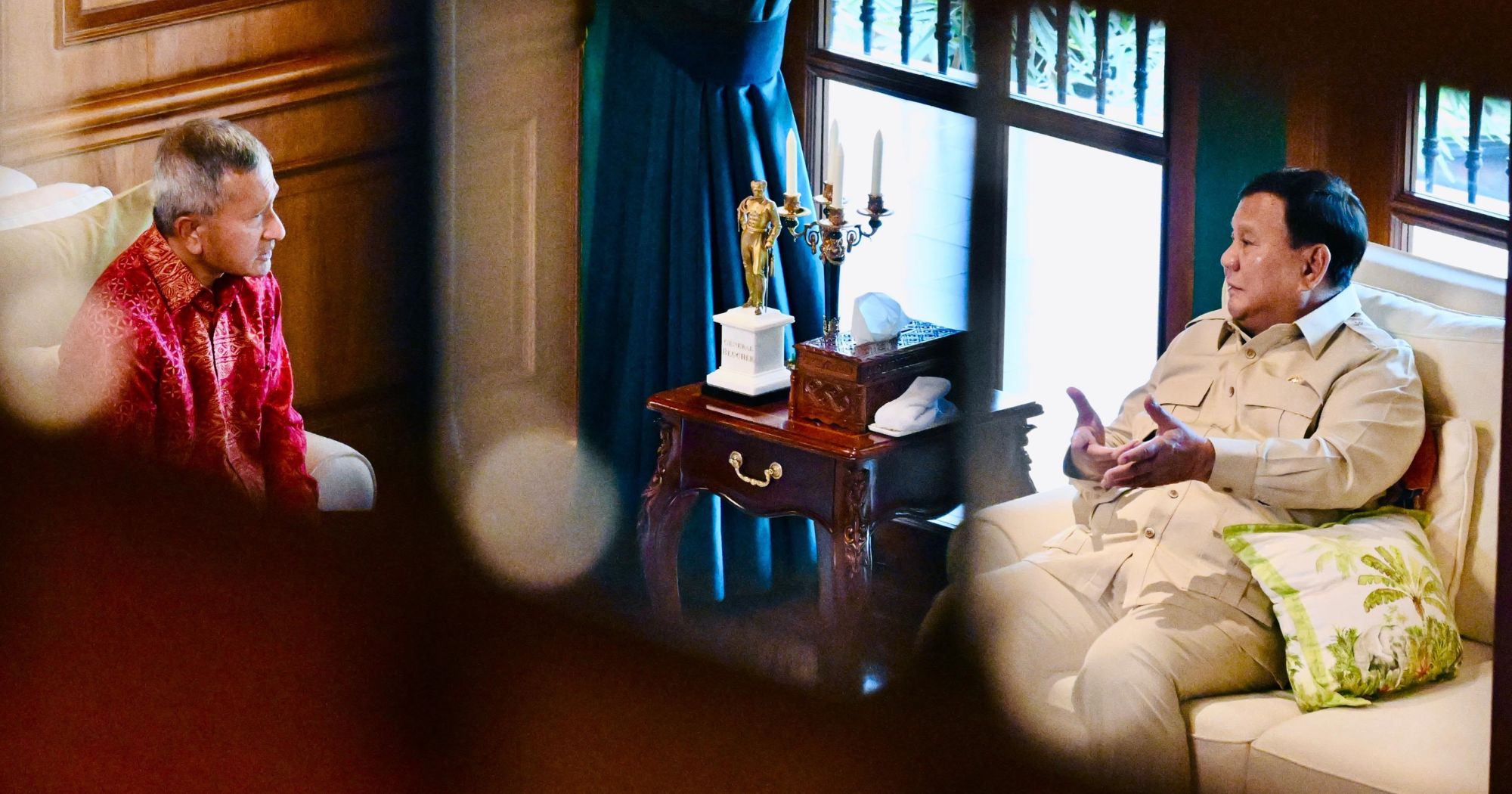
The meeting was reported by Israeli media outlet Haaretz, which also alleged that a delegation from Israel had discussed the death penalty with Singaporean officials.
In his questions, Fadli asked whether Singapore had requested that the meeting be kept secret, or why a correction direction under the Protection from Online Falsehoods and Manipulation Act (POFMA) was not issued against Haaretz, if this reporting was not factual.
The Ministry of Home Affairs (MHA) has since refuted Haaretz's claims.
In his written to response to Fadli's questions, SM Shanmugam, who is also Coordinating Minister for National Security, said that there were no public interest grounds to issue a correction direction against the media outlet at the time.
He added that Singapore regularly holds discussions with international counterparts on security and law enforcement matters, and that that particular meeting focused on operational and security-related issues.
Broader foreign policy matters were not discussed, he asserted, adding that such matters are addressed through appropriate foreign policy channels like the Ministry of Foreign Affairs (MFA).
Questions for Fadli
SM Shanmugam then addressed Fadli:
"If the Member believes that MHA should use such engagements to raise broader concerns about the policies or conduct of the country concerned, then he should say so clearly."
He further asked Fadli whether the same approach should apply consistently to all countries with which MHA engages.
He asked: "For example, when MHA holds operational discussions with other Middle Eastern or Asian countries, should we also raise the concerns Singapore may have with their conduct or policies?"
"If that is the Member's position, the government would be interested to understand how he proposes that such an approach would serve Singapore's overall interests."
Fadli's responses
Fadli responded to these questions on Nov. 4.
Whether policy concerns should be raised in engagements
On whether he believes that formal engagements should be used to raise broader concerns about a country's policies or conduct, he said his view "is simple":
"Settler activity and illegal territorial expansion in the West Bank, and especially settler violence, are grave violations of international law."
The Singapore government previously called the Israeli settlements in the West Bank illegal under international law and called on Israel to stop its expansion plans there.
Fadli posited that MHA should raise concerns about such policies and conduct as and when relevant when engaging with countries involved.
Singapore's cooperation with other countries in law enforcement and security matters must also be conducted in context of the nation's overall national interests and fundamental principles, including Singapore's commitments to the international law, he said.
Further, Fadli added that two officials in the Israeli delegation named by Haaretz have been linked to a settler movement conducting illegal activities in the West Bank.
"Given this context, I believe that it would have been relevant to clearly reiterate at this meeting Singapore's principled position that Israeli settlements in the West Bank are illegal under international law, and our deep concerns about settler violence against Palestinian civilians in the West Bank," he said.
This approach should be applied consistently to all countries and not just Israel, said Fadli, addressing SM Shanmugam's second question in his written response.
How this serves Singapore's interests
On SM Shanmugam's third question on how such a practice would serve Singapore's overall interests, Fadli emphasised the nation's need to uphold its principles against external influence.
He quoted SM Shanmugam's own words from 2023:
"As a small country, we have to be clear on what are our principles. We must always put Singapore's interests first, and never be afraid to act in our own interests.
Uphold our principles and positions consistently, impartially, objectively, and not let other countries, big or small, no matter how friendly, dictate to us what we do."
He added that it would be in Singapore's overall interest to consistently and impartially uphold its position against a violation of international law, including during the MHA's bilateral engagements.
When engaging with foreign counterparts, the nation should also maintain a whole-of government approach in upholding this commitment, he said.
Shanmugam's response
SM Shanmugam stood to respond to Fadli's comments, first asking for a clarification on whether a "whole-of-government" approach applies to all bilateral issues.
Fadli answered by reiterating his earlier stated points, but SM Shanmugam said they did not answer his question.
He called Fadli's suggestion of each ministry raising issues of international law and "all possible bilateral issues" with any country they meet a "novel" idea.
MFA and the Cabinet are responsible for deciding on the government's overall stance with regards to any country, including whether meetings take place at all, he said
SM Shanmugam raised the example of Singapore's Ambassador for International Law, Rena Lee, who made history on Nov. 3 by becoming the first Singaporean to be elected as an International Court of Justice (ICJ) judge.
She secured an "absolute majority" in votes, ahead of the United Kingdom, France and every other country, a "testament to our skill in diplomacy, in the way we conduct ourselves", said SM Shanmugam.
"Imagine you start a meeting with UK, France, U.S., and your objective is to ask for their vote in support, and you start out by saying– referring to the wars in the Middle East: Syria and Yemen together, millions displaced, hundreds of thousands of children and women killed."
Many of these countries supplied weapons for these wars, where breaches of international law have taken place, he added.
He went on: "So you start out by listing this category of international law issues, and then you say, by the way, can you please support us?
"I think members and Singaporeans can see how absurd and novel such a position is, but I take it that that is the member's position and his party's position on how we conduct international relations."
SM Shanmugam called out Fadli for "[walking] in further and [doubling] down" on what he called an "absurd" position.
He asserted that the importance of international law is irrelevant to the question of whether every ministry should be raising it with counterparts.
Haaretz not taken seriously
"I don't know them," he said of the two Israeli officials named in the Haaretz article, adding that he does not take the media outlet very seriously "because they also published falsehoods about Singapore and what we were supposed to have said — completely untrue".
SM Shanmugam then urged Fadli to submit questions on this matter if he was concerned.
He also accused Fadli of "sending two messages to two different audiences: one to the general public to present that we are focused on national interests", and a second one "to the Malay-Muslim community to jump on this Haaretz article".
The second, he said, is to "make absurd suggestions on how we conduct and how we should engage" with the belief that people "won't understand how interministerial conversations really take place".
It also tries to present the image that "the government is unprincipled and soft on Israel", he posited.
"That's what this question and this subsequent explanation is all about: getting people to view our international relationships through the prism of race and religion. That is just wrong."
Fadli refutes SM Shanmugam
Fadli stood again to address SM Shanmugam's points, categorically rejecting his characterisation that the issue is motivated by race and religion.
"This is primarily an issue about how Singapore can uphold its commitments to international law consistently, impartially, and objectively."
He also denied suggesting that Singapore should raise bilateral and foreign policy issues at every meeting, but rather that they should only be raised where relevant, such as in the case of the Israeli meeting.
Instead, he redirected his original question of whether Singapore had tried to keep the meeting a secret back at the senior minister.
Role of Minister and MP is to safeguard Singaporean interests: Shanmugam
In response, SM Shanmugam said that he did not see why the issue of settler violence was relevant to what MHA discussed with their Israeli counterparts.
"How is it more relevant than, say, discussing sale of weapons, which may lead to thousands of people being killed with possible breaches of international law?"
He also reiterated that the role of an MP and a minister is to safeguard Singaporeans' interests primarily, not just the principles of international law.
On the issue of the meeting's confidentiality, SM Shanmugam said meetings between Ministry of Home Affairs and counterparts are "almost always kept confidential", except when parties request for them to be made public.
"And I have given that answer that one party required requested it to be made public, and that meeting was made public," he said.