



Abroad


APEC must find new ways to cooperate 'even when we cannot agree on everything': PM Wong
"We should not allow our region to become divided into competing economic blocs," said the Prime Minister.
November 20, 2026, 11:28 AM
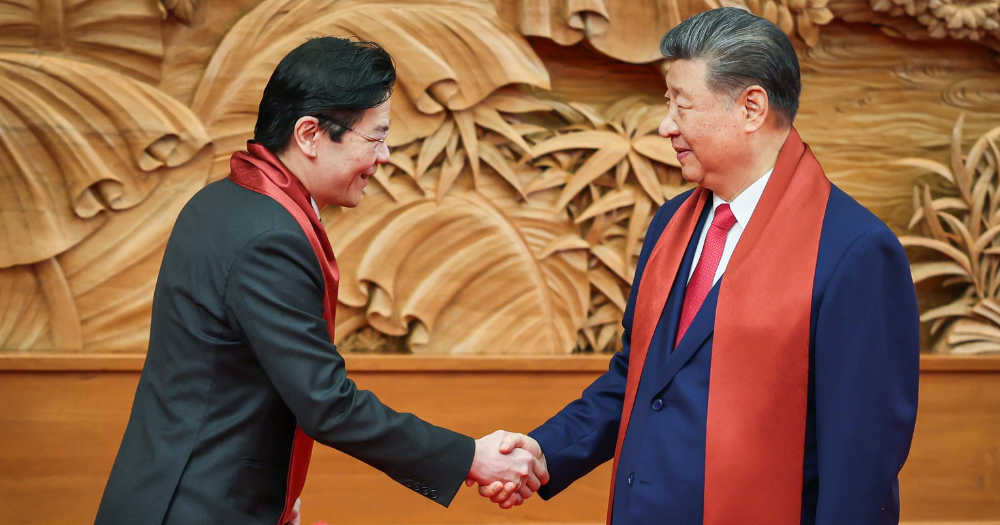
Image credit: MDDI


Prime Minister Lawrence Wong addressed the 33rd Asia-Pacific Economic Cooperation (APEC) Economic Leaders' Meeting in Shenzhen, China, on Nov. 19, 2026, urging leaders to adapt to a new era of globalisation and prevent the region from dividing into competing economic blocs.
PM Wong noted that while Shenzhen’s transformation reflects the wider Asia-Pacific success story of prosperity through openness, the conditions that enabled this success are facing new threats.
He warned that rising geopolitical tensions and the growing tendency to view economic ties through a national security lens are creating a more contested and fragmented global landscape.
To navigate these challenges, PM Wong outlined three key priorities for APEC.
1. Maintaining an open and connected Asia-Pacific
PM Wong emphasised the need to build bridges rather than barriers.
He called on economies to build upon existing trade agreements, such as the Comprehensive and Progressive Agreement for Trans-Pacific Partnership (CPTPP) and the Regional Comprehensive Economic Partnership (RCEP), and to take concrete steps toward realising a Free Trade Area of the Asia-Pacific.
He also expressed support for reforms to strengthen the World Trade Organization (WTO) and uphold a rules-based multilateral trading system.
2. Adopting flexible and pragmatic cooperation
Acknowledging the difficulty of reaching consensus among all APEC economies, PM Wong stated that this should not be an excuse for inaction.
Instead, he advocated a flexible approach where willing partners can move forward on initiatives, demonstrate their effectiveness, and keep the door open for other economies to join when they are ready.
3. Delivering practical benefits
Lastly, PM Wong said that economic cooperation should deliver real benefits for businesses and people.
He stressed that APEC's success will be judged by tangible improvements for businesses, workers, and citizens.
He highlighted the APEC Centre of Excellence for Paperless Trade — conceived by Australia, Singapore, and the APEC Business Advisory Council — as a practical initiative that reduces paperwork, lowers costs, and facilitates market access for businesses by enabling the electronic exchange of cross-border trade documents.
He also addressed the integration of artificial intelligence (AI) across the region.
While acknowledging the inevitable competition for AI leadership positions and hardware, he emphasised the need for close cooperation on AI safety and its responsible use.
He suggested that APEC can play a supportive role by facilitating AI adoption among Small and Medium Enterprises (SMEs), fostering investment in AI infrastructure, and equipping the workforce with the necessary skills.
Concluding his remarks, PM Wong welcomed China's continued emphasis on openness, connectivity, innovation, and shared development.
"These have been the foundations of our region’s development and must remain our guiding principles to shape the future of the Asia-Pacific."