Parliament


PAP MP Gho Sze Kee says it's 'unconscionable' for child living near popular school to not get in under new P1 registration framework
In response, Lee said the changes to the framework would "tilt" in favour of families living closer to a school.
October 07, 2026, 01:42 PM
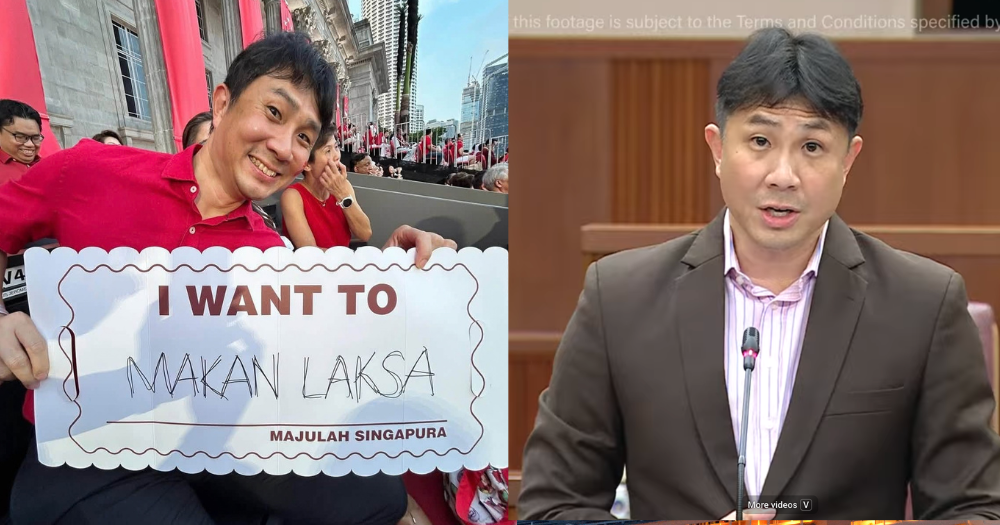
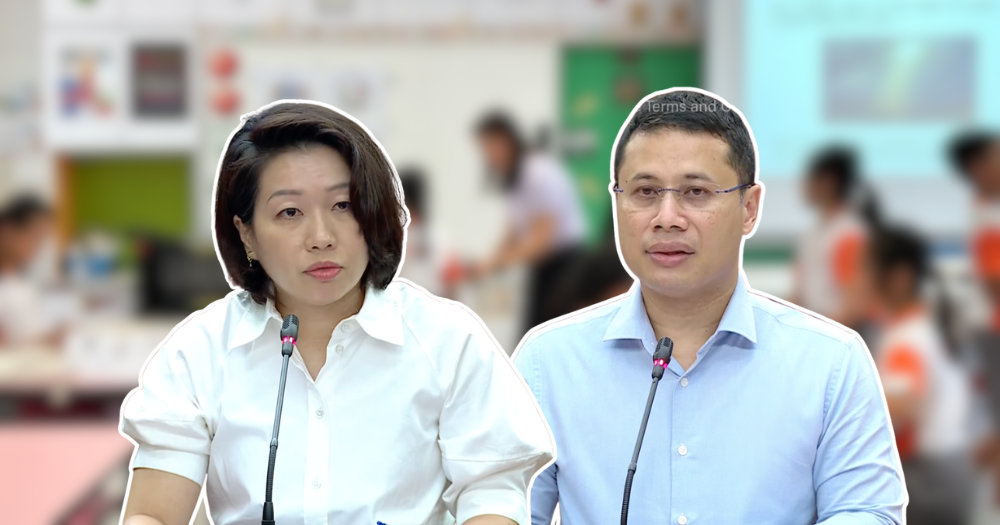
Photos from MDDI/YouTube and Mothership.


The number of places reserved for Phase 2C of the Primary 1 registration exercise from 2027, which is open to all children regardless of their prior connections to a school, will increase from 40 to 60 in all schools, except those with smaller cohorts of fewer than 180 Primary 1 pupils.
MOE will also introduce a two-track scheme under Phase 2C for schools in neighbourhoods where the proportion of public housing is significantly lower than the national average.
Under this system, half of the reserved places will be set aside for children living within 2km of the school, while the other half will be available to those living further than 2km away.
MOE announced these changes on Sep. 10, 2026.
In Parliament on Oct. 7, 2026, Education Minister Desmond Lee responded to questions from Members of Parliament (MPs) about these changes.
"Unconscionable" for children living nearby to miss out
Mountbatten SMC MP Gho Sze Kee described it as "unconscionable" for a child living "a stone's throw away" from a school to have to attend another primary school farther away simply because the nearby school is popular.
"We should never disadvantage or handicap a child because (of) his or her address... or due to his or her socioeconomic circumstances," she said.
Gho also asked how MOE would assess whether greater social mixing had actually been achieved under the new arrangements.
"Is bringing children from different socioeconomic circumstances from further-away neighbourhoods an end to itself, or will MOE have specific indicators to determine whether this has resulted in greater social mixing and, most importantly, better outcomes for the children and the pupils?" she asked.
In response, Lee said parents ultimately decide where to send their children, and they may have different considerations when choosing a school.
However, he acknowledged the frustration among some parents who live near a school but cannot enrol their children there because of its popularity.
He said there are only a finite number of places in each school, and that the government was aware of the issue.
This was why MOE had decided to increase the number of places reserved under Phase 2C, he said, adding that the change would "tilt" in favour of families living closer to a school.
Objective of changes is to widen access
Workers' Party Non-Constituency MP Andre Low also asked whether baseline outcome indicators would be used to assess socioeconomic mixing, and whether such metrics would eventually serve as a benchmark for deciding whether to expand the two-track scheme to other schools.
In response, Lee said the objective of the two-track system, as well as the wider Phase 2C changes, was to widen access.
"When you rely on home-school distance, and the makeup or composition of a neighbourhood around the school is predominantly of one housing type, for example, private housing, then the home-school distance in and of itself does not necessarily widen access to families of different socioeconomic backgrounds," he said.
As such, the two-track scheme aims not only to maintain access for children living close to the school, but also to create a wider mix of students.
"But at least now we widen the circle and give opportunities. And for those living within zero to two kilometres, we are preserving access. We are not taking it away," Lee said.
Increasing intake of popular schools
Lee said one common recommendation he receives is to increase the intake of popular schools.
While this might sound sensible on its own, he said it must be balanced against other considerations and would not be feasible across the board.
Lee noted that if a school's cohort continued to grow, the school would eventually face infrastructure constraints.
Increasing the intake of popular schools would also not necessarily improve the social mix of those schools and could result in falling enrolment at other nearby schools.
"Ultimately there are only so many students, and our cohort sizes are shrinking," he said.
A larger intake at popular schools could also result in the merger or closure of some surrounding schools, Lee added.
"The impact is on the ability for us to provide a good geographical spread of schools across the island, including in the neighbourhoods surrounding some of these so-called popular schools, and affect geographical proximity access for some parents who would prefer that," he said.