News


S'pore consumers lose S$3.82 million from fitness closures, CASE calls for mandatory safeguards on prepaid packages
One of the suggestions include a mandatory cooling-off period for high-value prepaid packages.
October 05, 2026, 06:12 PM
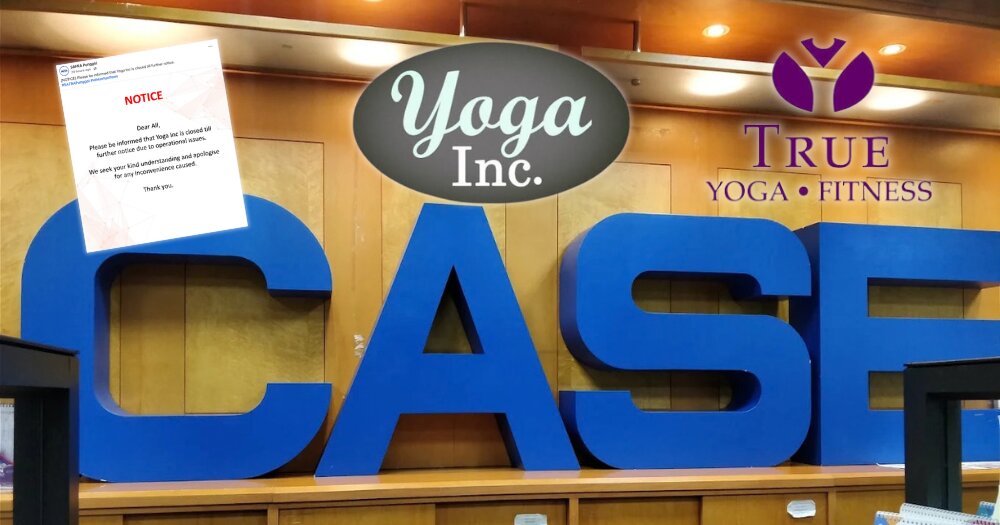
Cover via Vu Long Tran/Google Maps, SAFRA Punggol/Facebook


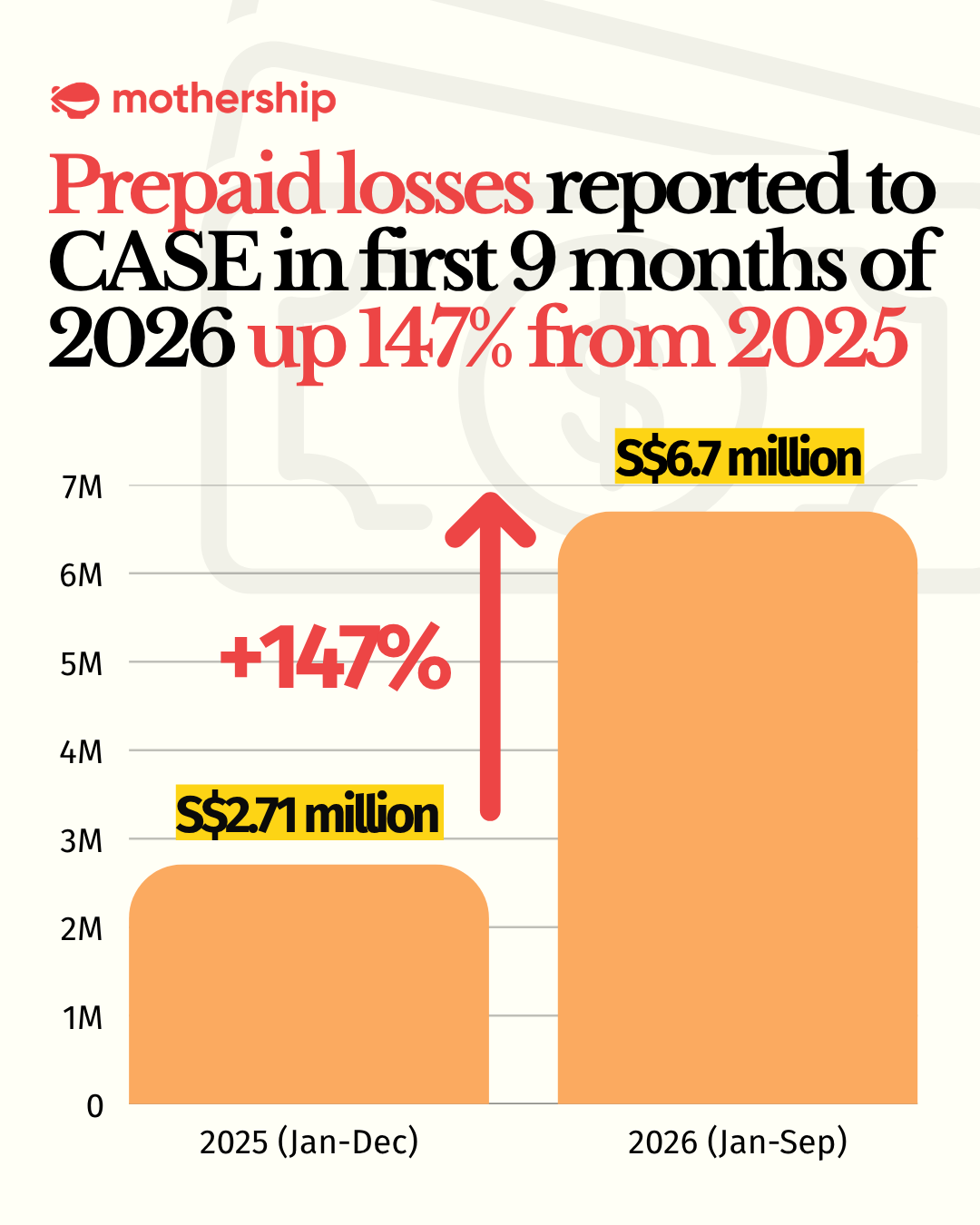
Consumers reported almost S$6.7 million in prepayment losses to the Consumers Association of Singapore (CASE) between Jan. 1 and Sep. 30, 2026.
This was about 147 per cent higher than the S$2.71 million reported in 2025, CASE said in an Oct. 5 media release.
 Infographic by Mothership
More than half of this year’s reported losses came from complaints received following the closures of True Fitness, True Yoga and Yoga Inc., involving money consumers had paid upfront for services.
1,610 complaints following fitness closures
Between Sep. 10 and 30, CASE received 1,610 complaints involving nearly S$3.82 million in reported prepayment losses following the fitness businesses’ closures.
True Fitness and True Yoga accounted for 1,518 complaints involving about S$3.78 million, while Yoga Inc. accounted for another 92 complaints involving about S$32,827.
CASE said it had helped affected consumers lodge claims and proofs of debt with the relevant liquidators.
However, the association noted that consumers are generally treated as unsecured creditors when a business enters liquidation. Their prepaid funds are therefore not necessarily protected, and lodging a claim does not guarantee that they will recover the full amount.
Three mandatory safeguards
CASE said the scale of the reported losses showed the need for stronger protections, "particularly as consumers are generally treated as unsecured creditors when a business enters liquidation".
In a statement, CASE said:
"Several overseas jurisdictions have introduced or proposed measures to protect consumers who make advance payments. CASE believes Singapore should similarly consider mandatory safeguards for sectors involving substantial or long-term consumer prepayments."
The association called on the government to adopt three complementary measures.
1. Cooling-off periods for high-value packages
The first is a mandatory cooling-off period for high-value prepaid packages.
This would give consumers time to reconsider purchases involving substantial upfront payments and cancel without a penalty.
The release did not specify a proposed duration for the cooling-off period or a minimum package value.
2. Compulsory CaseTrust accreditation
CASE also proposed making CaseTrust accreditation compulsory for businesses in sectors involving substantial or long-term consumer prepayments.
Accreditation would require businesses to provide safeguards such as prepayment protection, transparent pricing, clear contractual terms, proper disclosure and reasonable refund arrangements.
3. Investigation and enforcement of potential wrongful trading cases
The third proposal calls for potential cases of wrongful trading to be appropriately investigated, with enforcement action taken under section 239(6) of the Insolvency, Restructuring and Dissolution Act 2018 where the relevant legal requirements are met.
CASE said circumstances involving substantial prepayments collected shortly before liquidation could warrant closer examination.
"Effective investigation and enforcement, where supported by the evidence, would strengthen accountability and provide a meaningful deterrent.
These proposals are intended to strengthen the overall consumer protection framework and do not constitute an allegation of wrongdoing against any particular business or individual."
CASE urges prompt action
CASE president Melvin Yong said the recent fitness closures and sharp rise in reported losses highlighted the limitations of relying solely on voluntary measures.
“Consumers should not continue to bear substantial losses when prepaid services cannot be fulfilled because a business ceases operations,” he said.
CASE called for the safeguards to be introduced promptly to protect consumers’ money and establish clear standards for businesses.
The measures remain proposals from CASE. Government action would be needed to make the proposed protections compulsory.