Environment


Marine foraging group disbands after Changi coastal foraging controversy
At its peak, the group had 900 members.
August 02, 2026, 01:10 PM
Photos via Douyin

 The group behind the Changi intertidal foraging that made headlines over the past week has been disbanded.
According to Lianhe Zaobao, the group, which grew from 180 members to nearly 900 members in July 2026, was disbanded on Jul. 26.
The group administrator announced in the group chat that the group was disbanding due to public pressure and the ongoing controversy.
The incident
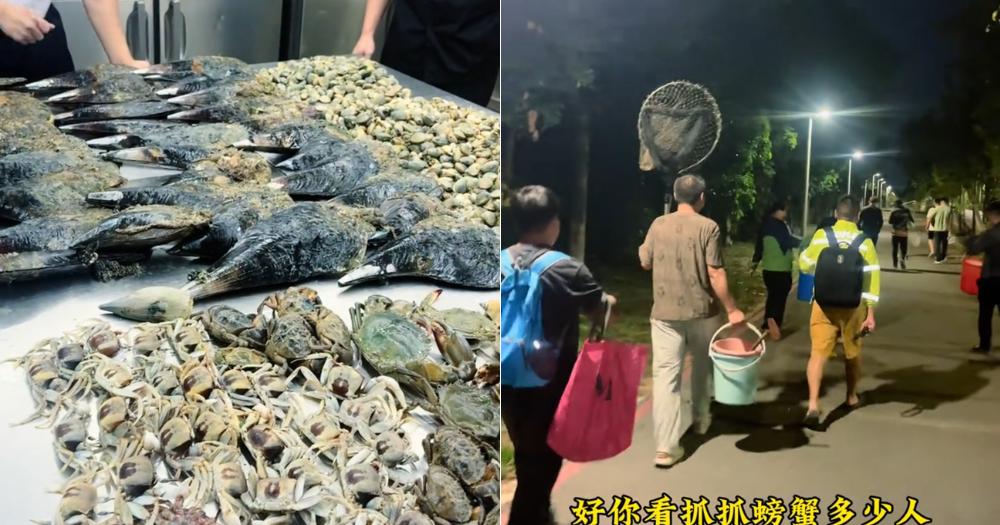
In the Facebook group Complaint Singapore, one user shared on Jul. 13 screenshots and a video of a group of individuals gathering and foraging in an intertidal area with pails in hand.
The gathered wildlife was later laid out on a table in a restaurant kitchen.
They include a number of molluscs, including what looks to be fan clams and crabs.
Plates of cooked food were later seen on a dining table.
The restaurant, which allegedly prepared and cooked marine life foraged by a group from the shores of Changi, has received numerous one-star reviews on Google Maps after the issue gained attention online.
Pasir Ris-Changi GRC MP Valerie Lee, who is in charge of the Changi division, wrote in a Facebook post that she was "extremely disappointed" after watching the video.
Characterising the behaviour as "deplorable", Lee commented that it was not about the legality of it, but about a lack of respect.
In a Jul. 26 video, local science content creator Biogirl MJ, who hosts the education platform Just Keep Thinking, commented on the incident, sharing that she had also left a review on the restaurant's Google Maps listing.
Created to exchange information
The intertidal foraging group was created by a man who shared his foraging experience on the Chinese social media site Douyin.
The man shared videos of his foraging trips and catches, which went viral on Douyin, leading other users to enquire about the location, the tide times, and whether they could participate, Lianhe Zaobao said.
From there, the group was created to allow interested participants to arrange trips together, exchange information about tides and weather, where to catch crabs and shellfish, and share videos and photos of their catch.
A Lianhe Zaobao reporter who joined the group saw that they would organise at least three intertidal foraging trips a week.
Numerous members in the group would organise trips, checking the tides themselves and recruiting others to join them on the way to coastal areas like Changi, Sembawang, Punggol and Pasir Ris.
The group chat also contained information that teaches beginners how to forage along the coast, including an equipment list, an introduction to a tide app, and satellite maps and route guides for specific locations.
The reporter also noted that people would share their intertidal foraging trips, with some members sharing that they would take their catches home or send them to restaurants to be cooked.
Disband
Following the viral video that drew a lot of backlash online, the administrator deleted all his intertidal foraging videos from his account on Jul. 24.
In addition, he announced to the group that, to protect marine life, respect local laws and regulations and avoid causing inconvenience to members, he would be suspending all coastal foraging activities, Lianhe Zaobao reported.
The administrator also reminded the group to abide by the rules, forage in a "civilised manner", not collect protected species, and not damage the marine environment.
However, Lianhe Zaobao noted that some group members still went to forage at Sembawang a day after the administrator's announcement.
The group shared the videos but were asked to remove them.
On Jul. 26, the administrator disbanded the chat entirely.
Not illegal to forage
Karenne Tun, Group Director at the NParks National Biodiversity Centre, previously said in response to Mothership's queries that NParks is aware of a social media post on intertidal foraging and "seeks the understanding of the public to protect our intertidal biodiversity".
According to Tun, NParks restricts the collection of animals from intertidal zones under its jurisdiction.
These zones include Sisters' Islands Marine Park, Sungei Buloh Wetland Reserve, Labrador Nature Reserve's rocky shore and Chek Jawa Wetlands.
For intertidal areas outside its jurisdiction, Tun says it focuses on public education on best practices and how visitors can interact responsibly with marine wildlife.
Tun also said, "The removal of wildlife from their habitats, including intertidal zones, harms our biodiversity and disrupts our ecosystems. Each species plays a unique role in its ecosystem, and their removal can have far-reaching consequences on ecosystem services such as pollination, seed dispersal and nutrient cycling."
"This in turn affects the ecological resilience of our natural habitats. Removing wildlife from their habitats also endangers their population, especially for species which are already threatened," she continued.
The public who are unfamiliar with marine wildlife species may also endanger their own safety, as they may not recognise poisonous, stinging, or venomous marine wildlife, Tun cautioned.