Parliament


Govt will proceed to redevelop Maju Forest & Gillman Barracks, but plans not finalised: Alvin Tan
The government will continue to engage stakeholders and take in views and feedback before deciding how to carry out the development of both sites.
August 04, 2026, 02:21 PM
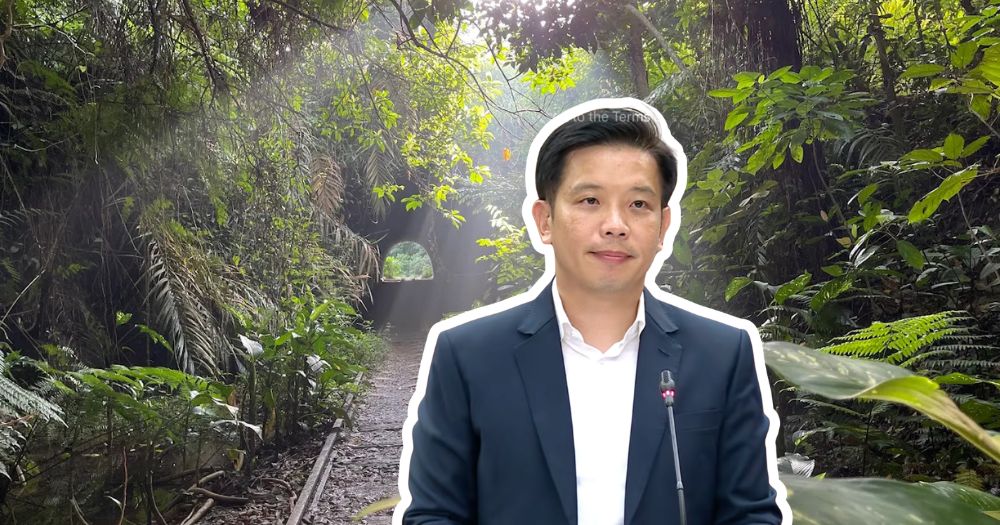
Top photo from MDDI/YouTube and Issac/Google Maps


Minister of State for National Development Alvin Tan said plans for Gillman Barracks and Sunset Way "have not been finalised".
He added that while the formal consultation period for the Environmental Impact Assessment (EIA) and Heritage Impact Assessment (HIA) ends on Aug. 6, 2026, the government will continue to engage stakeholders and take in views and feedback before deciding how to carry out the development of both sites.
Tan was responding to questions from at least 13 Members of Parliament (MPs) about the fate of Gillman Barracks and Maju Forest, such as the conservation of the biodiversity there, and whether alternative sites were evaluated.
Total number of households has increased
Tan noted that the government plans decades ahead to meet the needs of Singaporeans while keeping options open for future generations.
Following trends, more homes are needed as compared to the past, as "the total number of households has increased".
He pointed out that "many members on both sides of this house have also called for the relaxation of the eligibility criteria to provide wider access to public housing and shorter waiting times for built-to-order flats, and we understand, and we share these aspirations".
He added:
"But if we want more Singaporeans to qualify for HDB housing, and to get their homes sooner, then we must build more homes and we must build them faster."
He said, "the question is where we build and how we build responsibly".
Tan shared existing examples of areas for redevelopment, such as the relocation of Paya Lebar Air Base to Changi and Tengah, and the consolidation of Tuas Port.
As part of the Greater Southern Waterfront, the former Keppel Golf Course is also already being redeveloped, and by 2030, more than 400 hectares of golf-course land will be taken back for redevelopment.
Conservation in Singapore
Tan noted that by 2030, the government aims to restore and enhance 80 hectares of forest, marine and coastal habitats and establish 300km of nature ways.
More than 7,200 buildings and structures in over 100 areas have also been conserved through the Urban Redevelopment Authority's Master Plan, which is reviewed every five years through a "major public consultation exercise".
However, "there will be occasions when no other suitable site can meet the same need in the same area, and within the required timeframe".
Tan added that in those cases, trade-offs must be weighed to serve important national needs such as providing homes for Singaporeans.
Studies conducted
"We proceed with great care when a site has significant ecological or heritage value," Tan said.
He stated that government agencies appoint independent external consultants to conduct EIAs and HIAs, drawing on input from nature and heritage groups.
The consultants may also propose a preliminary Environmental Management and Monitoring Plan (EMMP) which provides "mitigation measures, monitoring arrangements and reporting requirements that will apply during development".
In explaining the process, Tan shared:
"So, our general approach is to avoid impact when we can, where we can, reduce them where we cannot, and mitigate those that remain. We then publish the findings, the potential impact, and propose mitigation measures in the EIA or HIA report, and this allows residents and the wider public to study the proposal and to give their feedback and views. Agencies then consider the studies and these feedback before finalising the detailed plans."
Tan said the studies are not meant to "justify a detailed plan that is already fixed".
"They are an integral part of the consultation process through which the plan is shaped."
Planning intention for housing
Tan said that the planning intention for housing had been reflected in the Master Plan since 1980 and reaffirmed in subsequent reviews.
He added that brownfield redevelopment in Clementi, Bukit Merah and surrounding areas was prioritised first.
Several older estates in Clementi and Bukit Merah were redeveloped under the Selective En bloc Redevelopment Scheme (SERS).
However, demand for housing in these estates remained strong, Tan said, with Build-To-Order (BTO) launches at Clementi Emerald and Berlayar Rise being oversubscribed by four times.
Tan added that the government is unable to give exact figures of how many homes the sites will provide as the detailed design has not been finalised.
He added that other sites that appear vacant or underused are also intended for housing, including the former Raffles Junior College site at Mount Sinai and the former bus facility at Ghim Moh.
Tan highlighted that the government's approach to both the Gillman Barracks and Sunset Way sites "will be informed by science and evidence".
"But in our current conceptual plan, we already reduced the number of homes to retain important green and heritage areas identified through the studies, if we conserve even more, we will build even fewer homes."
Will proceed with redevelopment: Tan
In response to Tan's speech, WP Non-Constituency Member of Parliament Andre Low asked if he could confirm whether "not proceeding with development" was an option, as opposed to just "adjusting developmental boundaries or taking mitigation measures".
Tan said he had "made it quite clear" that the two sites have already been zoned for residential use under the Master Plan, and have been set aside for housing.
"So we will proceed, but how we build is important," following which Tan reiterated the importance of EIAs and HIAs.
Tan added that they have looked for alternatives in the vicinity of both sites, and other factors are taken into consideration, such as the availability of the land, the leases remaining on the land, and if they have additional uses.
HDB receiving and reviewing feedback
On Jul. 26 and 30, MP for Tanjong Pagar GRC Rachel Ong held dialogue sessions with a total of 430 attendees, reported The Straits Times (ST).
In response to Mothership's queries, the Housing and Development Board (HDB) stated that as of Jul. 28, they had received 2,712 responses for Sunset Way and 860 responses for the Gillman Barracks reports.
HDB's public feedback channels are open from Jul. 10 to Aug. 6, 2026.
HDB added that all feedback received will be reviewed alongside the findings of the environmental and heritage studies, as well as other planning considerations, before detailed development plans for the site are finalised.
Tan added that after the formal consultation period closes on Aug. 6, 2026, further engagements with stakeholders will be conducted and the study findings and feedback will be closely reviewed before finalising detailed development plans.
"We will also publish a report summarising agencies’ responses to the feedback, and any amendments made to the original set of plans."
Tan concluded his speech by saying:
"The question before us is not whether housing, greenery, or heritage matters; they all do. The challenge is how we balance these needs responsibly within our limited space. We will and must always make the best use of existing land and safeguard our most important natural and heritage assets, but there will be times where we cannot avoid difficult trade-offs.
When that happens, we must be clear about why we need to build, deliberate about where we build, and take great care over how we build. We must be honest with Singaporeans about the choices before us, listen carefully to their views and improve our plans wherever we can. And after weighing all these different considerations, the government must decide in the best interests of Singapore and Singaporeans."