Environment


NParks to increase crow shooting operations after culling over 500 since Mar. 2026
The additional districts were selected partly because they have large numbers of crows, which have been averse to traps.
July 17, 2026, 02:58 PM
Photos from Chee Hong Tat's Facebook and Canva


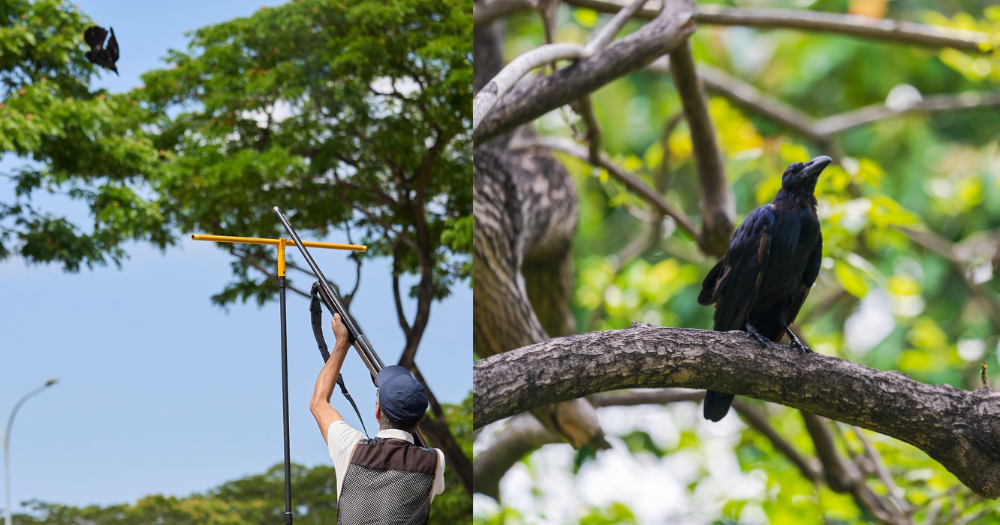
Since launching crow shooting operations on Mar. 24, the National Parks Board (NParks) has culled more than 500 crows.
Now it has been progressively rolling out this method in other districts, said NParks' group director of wildlife management How Choon Beng in a Jul. 17 statement.
These districts include Bukit Panjang, Marine Parade, and Tanah Merah.
They were selected as they have large numbers of crows, which have been averse to traps in the area, and they were deemed suitable sites to conduct crow shooting safely.
Crow shooting
NParks resumed crow shooting operations in Singapore from Mar. 24 due to an increase in crow population and in public complaints about their aggression.
Such feedback surged from over 460 cases in 2020 to more than 2,000 cases in 2025.
As of June 2026, operations were conducted in nine districts: Bishan, Jurong, Kranji, Punggol, Sembawang, Tampines, Toa Payoh, Woodlands, and Yishun.
Shooters have to adhere to strict shooting protocols, such as ensuring that the shooting trajectory of the pellets is always directed upwards, How said.
At the same time, they also need to adapt according to varying site conditions. Crows can detect and recognise danger, making them difficult to predict due to their adaptability, How explained.
NParks has described crows as an invasive non-native species that poses a threat to Singapore's native biodiversity.
They may also attack residents when they sense that their young are threatened, and can cause noise, soiling, and hygiene issues.
A complementary measure
"Crow shooting is a complementary measure that will augment our existing crow management efforts, which will continue to be carried out on top of the progressive implementation of shooting operations," How said.
These other efforts include removing crow nests, studying their ecology, reducing food sources, modifying their habitat, and monitoring feedback on illegal bird feeding.
How assured that the various measures collectively will "contribute towards a gradual and sustained reduction in crow numbers".