Branded

‘I do wish I spoke up’: How one S'porean regrets staying silent when his friends turned to drugs in secondary school
He's still not sure if cutting them off was enough.
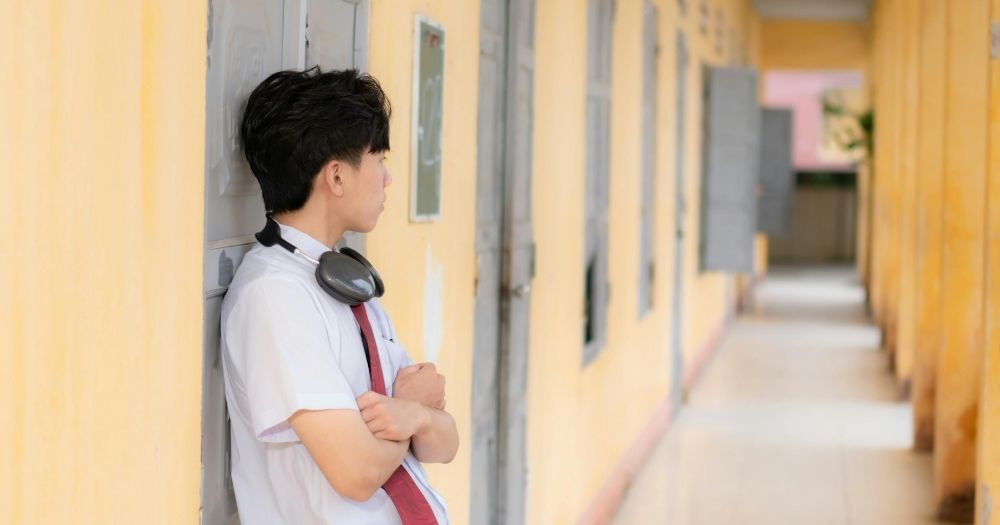
Photo from Canva.
If you’re a working adult in Singapore, you’d probably look forward to meeting your secondary school friends to take a break from the corporate rat race and reminisce about the good old days.
You know, the times where you’d mug together for the O- or N-level exams, or the naughtier times like when you’d skip school together to spend an entire day at the LAN shop.
That's the reunion a lot of people take for granted, and unfortunately for Daniel, one he doesn’t get to have.
Now in his late-20s, Daniel has no idea what his secondary school friends are up to, or whether they're even ok — a result of his own decisions more than a decade ago.
Some friendships don’t last and that’s perfectly fine, but the circumstances of Daniel’s friendship break up is a little different.
A small smile etched across his face as he recalled the times spent with his secondary school friends, describing his clique as a bunch of "typical troublemakers".
"We were intelligent and could probably do decently in school but had very misplaced priorities, short attention spans, and an appetite for mischief which was simply more instantly gratifying than paying attention in school," he said.
“If it's legal elsewhere, how bad can it be?”
The mischief started off harmless and small in Secondary 3, like sneaking off to the toilet without a permission pass. And slowly got bolder, like sneaking a smoke break in that very same toilet.
But it didn’t stay small nor innocent for long.
One day, while they were hanging out together on a weekend, Daniel’s friends casually started smoking marijuana.
Daniel explained that he was known to be the “goody two-shoes” among the group, so the fact that they had access to illegal substances alarmed him.
Daniel’s friends told him to relax, however.
Since marijuana was legal in other parts of the world and generally accepted elsewhere, such as Amsterdam, they reasoned, getting into it wasn’t as bad as it was made out to be.
"I was pretty shocked at first because up until that point it was never something I'd seen being done outside of movies or television shows so I was taken aback," Daniel recalled.
While Daniel wasn’t comfortable with their bad habits, he never dared to question his friends either, as he feared that he would be seen as a killjoy and end up being left out of his social circle.
After all, they had been friends since Secondary 1, and being left out meant he’d no longer have a clique to hang out with during recess or after school, or play basketball with on the weekends.
“I thought it was alright as long as I wasn’t actually partaking in the act itself”
"I think my desire to be accepted within the group also made me accept it very quickly rather than questioning it and realising that this was a bad thing my friend was doing."
Daniel added: "They were doing their own thing and they are their own people — I think the fact that I wasn't partaking was good enough for me. It was a lot of twisted logic to convince myself it wasn't a big deal."
So while his friends were in the school toilet smoking marijuana, he hung around outside to keep them company, which also meant buying them time if a teacher or schoolmates came close.
“While I wasn’t actually smoking (marijuana) with them, helping them to keep watch still felt uncomfortable because it made me feel complicit,” Daniel said.
"We eventually stopped messaging each other”
Eventually, his friends moved on from marijuana to harder drugs.
This time, he still didn’t confront his friends. Instead, he slowly saw himself hanging out with them less.
Daniel’s friends didn’t ask him to come by, and he didn’t ask to be invited.
He simply stopped being part of their hangouts, and they did not message him either.
“I guess they didn’t miss me enough to ask why,” he said.
"It was just distancing over time because I started to feel really uneasy about being their friends when it felt like everything started to revolve more and more around substance abuse for them."
There was no single blow-up or dramatic goodbye. Although it was Daniel’s choice to leave the friend group, it wasn’t an easy decision to walk away.
"I felt pretty bummed out. On one hand I did feel relief because I felt like I had escaped the grasp of something damaging. On another hand, it did come with a lot of heaviness because these were still my friends who I had a lot of history and good times with in Secondary 1 and 2."
These were his first real friends from secondary school, the ones he’d copy homework from, shared inside jokes during lessons, and spent countless hours creating memories that went far beyond textbooks and exam halls.
After graduating from secondary school, Daniel made the conscious decision not to keep up with his friend group.
He heard from acquaintances that some of them furthered their studies in tertiary education, but that’s as much as he knows about them.
The what-ifs that never quite go away
Now a working adult, Daniel can’t help but to look back and wonder what his secondary school friends are up to now.
Did the dream of going on that graduation trip to Bali ever made it out of the group chat? Are they too, like Daniel, part of the corporate rat race? Most importantly, how are they doing?
He never will, because cutting them off meant losing that thread for good.
"What if I had given in to drugs when they offered? I think that's the scarier what-if that makes me feel very relieved," he said.
"Would I still be where I am now? Would I be in jail? Would I have a job? Would I like my life? It is a spiral, yes — but it also makes me grateful I didn't try it myself."
But there's another what-if that sits heavier: What if he had just spoken up and told them not to go down that path?
"Maybe I'd still be friends with them and know where they are," he pondered.
He added, “Maybe if I’d spoken up, they would’ve heard me. Probably not immediately but it could have stuck with them later.”
“I don’t know what I would have said then… maybe I’d have expressed how I’m concerned about the side effects on them. But basically, I could have been more explicit about how uncomfortable it made me feel.”
Speaking up, he says now, is the braver and kinder choice.
Looking back, Daniel doesn't think his silence made him complicit in his friends' choices.
"I don't think it can be attributed to me. I know that they knew I didn't approve too. I don't think my silence was necessarily a significant part of their downward spiral," he said.
But he does believe speaking up could have made a difference — not for his own sake, but for theirs.
It's his biggest regret, and the advice he'd give to anyone who finds themselves in his position.
"I do wish I spoke up. If anything, maybe they'd just make fun of me a bit. But why not say something anyway? If they won't listen then at least I did my part of being a good friend," he says.
"I think anyone facing a similar situation should seriously consider speaking up. It's not just about protecting yourself, but also — being a good friend means to speak up for them. This can sometimes mean protecting them from their own actions too."
Back then, Daniel believed that staying silent was part of keeping friendships. Now, however, he understands it differently.
Sometimes, friendship isn’t just about going along, it’s also about being honest enough to speak up even when it is easier not to.
This article brought to you by Central Narcotics Bureau has reminded the writer to check in on her friends.
Want to find out how you can help your friends? Check out this quiz to learn which statements work best for you.