News


I tried using a beverage container return machine, got an error & took 2 weeks to get my S$0.10 deposit back
Some tweaks might make it work better.
July 16, 2026, 10:49 AM
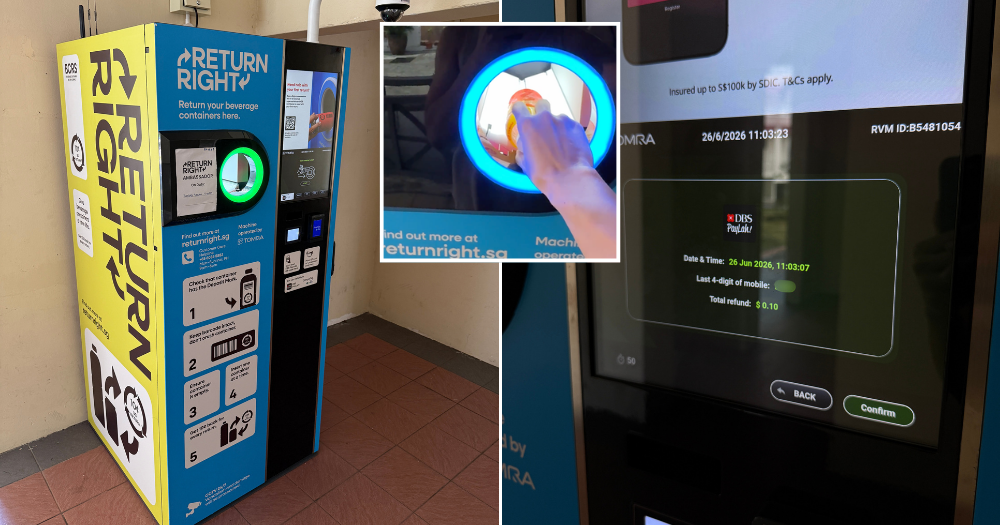
Photos via Mothership.


Singapore's bold attempt at getting everyone to recycle plastic and aluminium drink containers launched on Apr. 1, 2026.
It's been almost three months, and so far, headlines and commenters online appear to suggest confusion with the scheme.
"Singaporeans Question Bottle Deposit Refunds Under New Recycling Scheme," read one headline.
"Man asks, 'what's the point'?" Another suggested.
"How hard can putting a bottle into a machine and getting 10 cents back be?" I wondered.
So, I decided to hunt for the apparently "rare" bottles eligible under the Beverage Container Return Scheme (BCRS) and try it for myself.
BCRS logo
BCRS started as an idea from a 2019 citizens' workgroup on recycling.
It has now manifested into more than 1,000 collection machines around the island and a logo on container packaging.
Under the scheme in Singapore, a bottle is eligible for the 10-cent refund if, and only if, it bears the BCRS logo on its packaging.
Here's what it looks like on the packaging of a bottle of Pokka iced lemon tea.
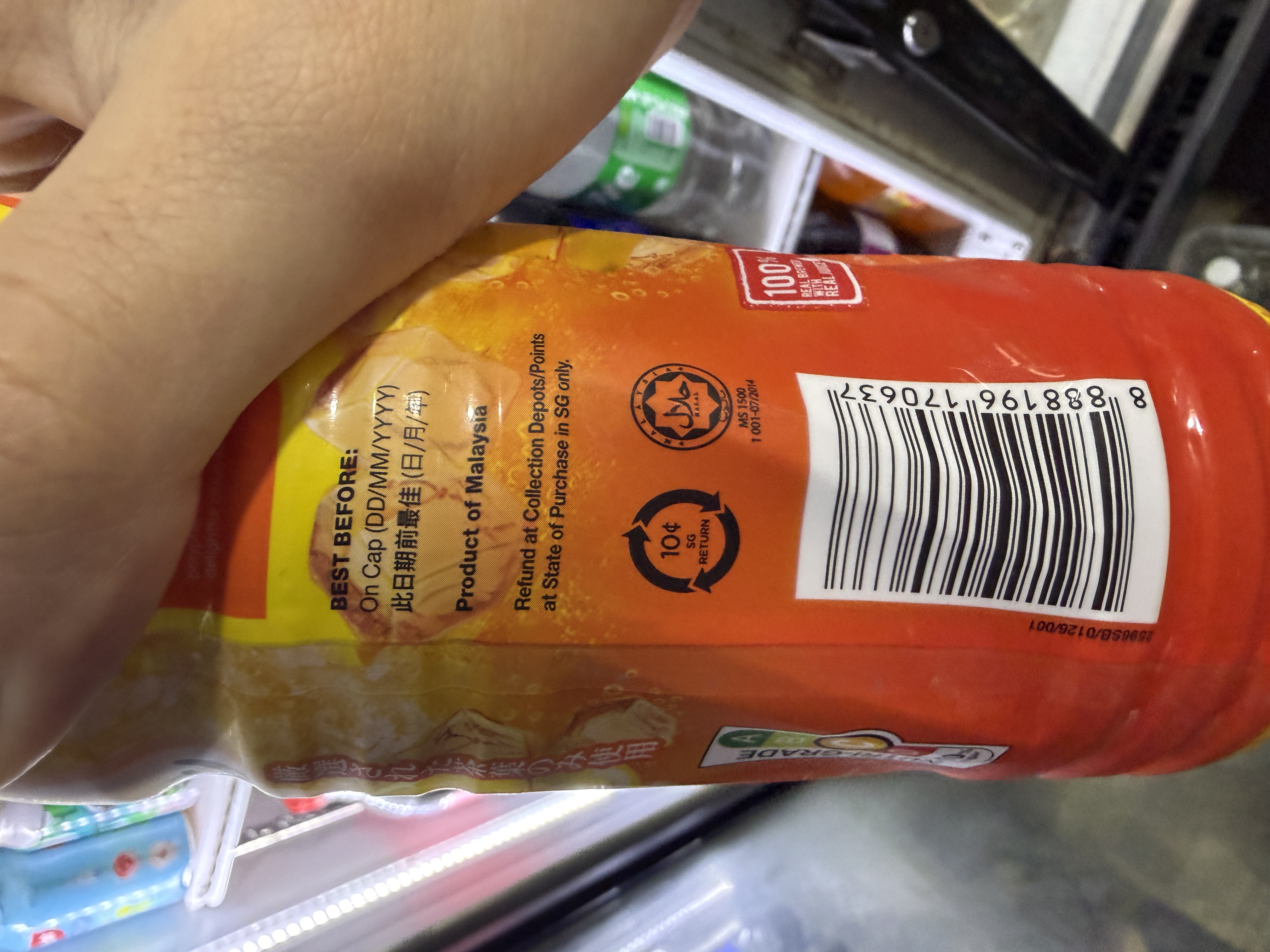 Photo via Mothership.
Some of these other suggestive recycling labels do not qualify you for 10 cents at the container return machines.
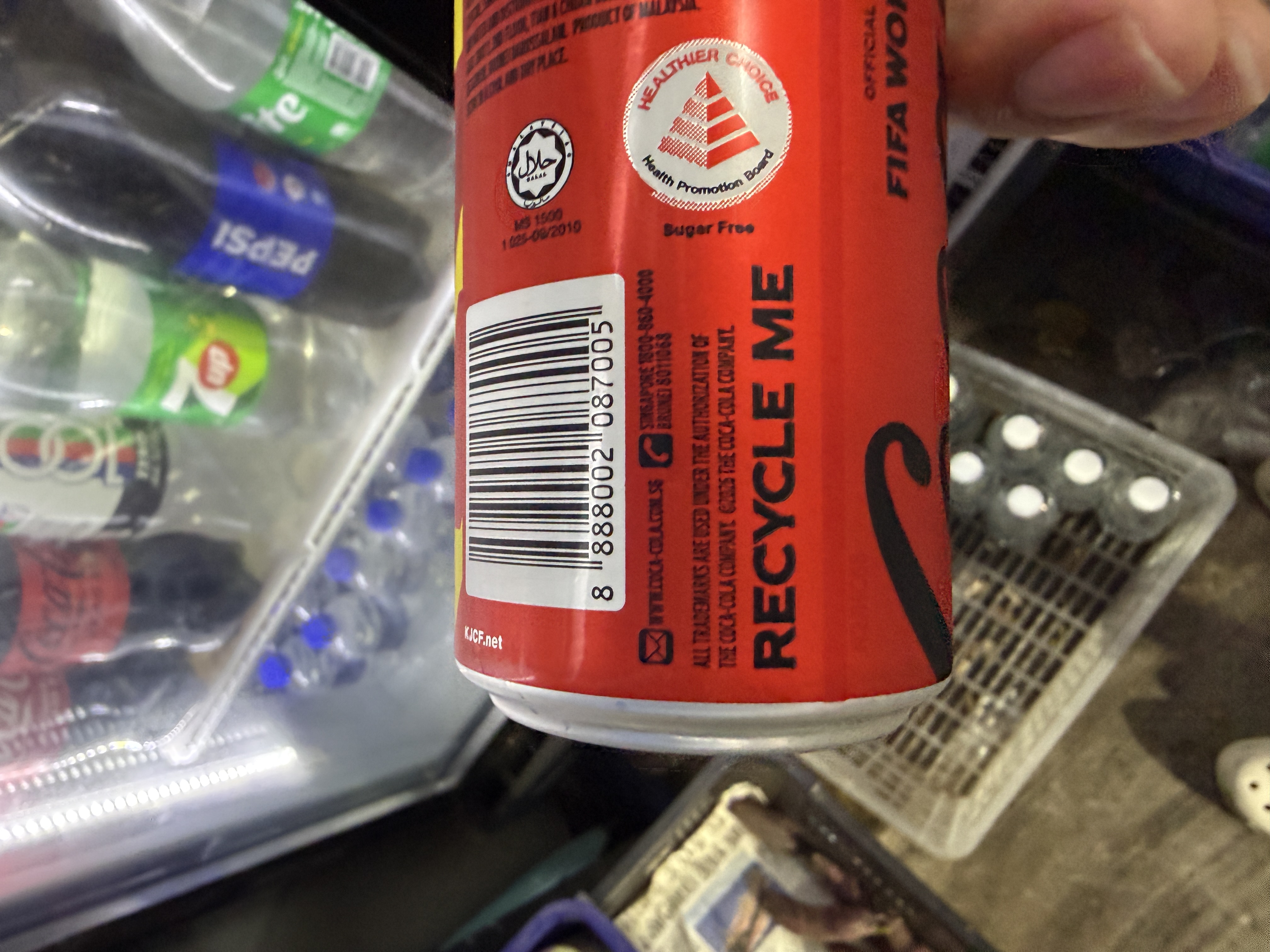 Photo via Mothership.
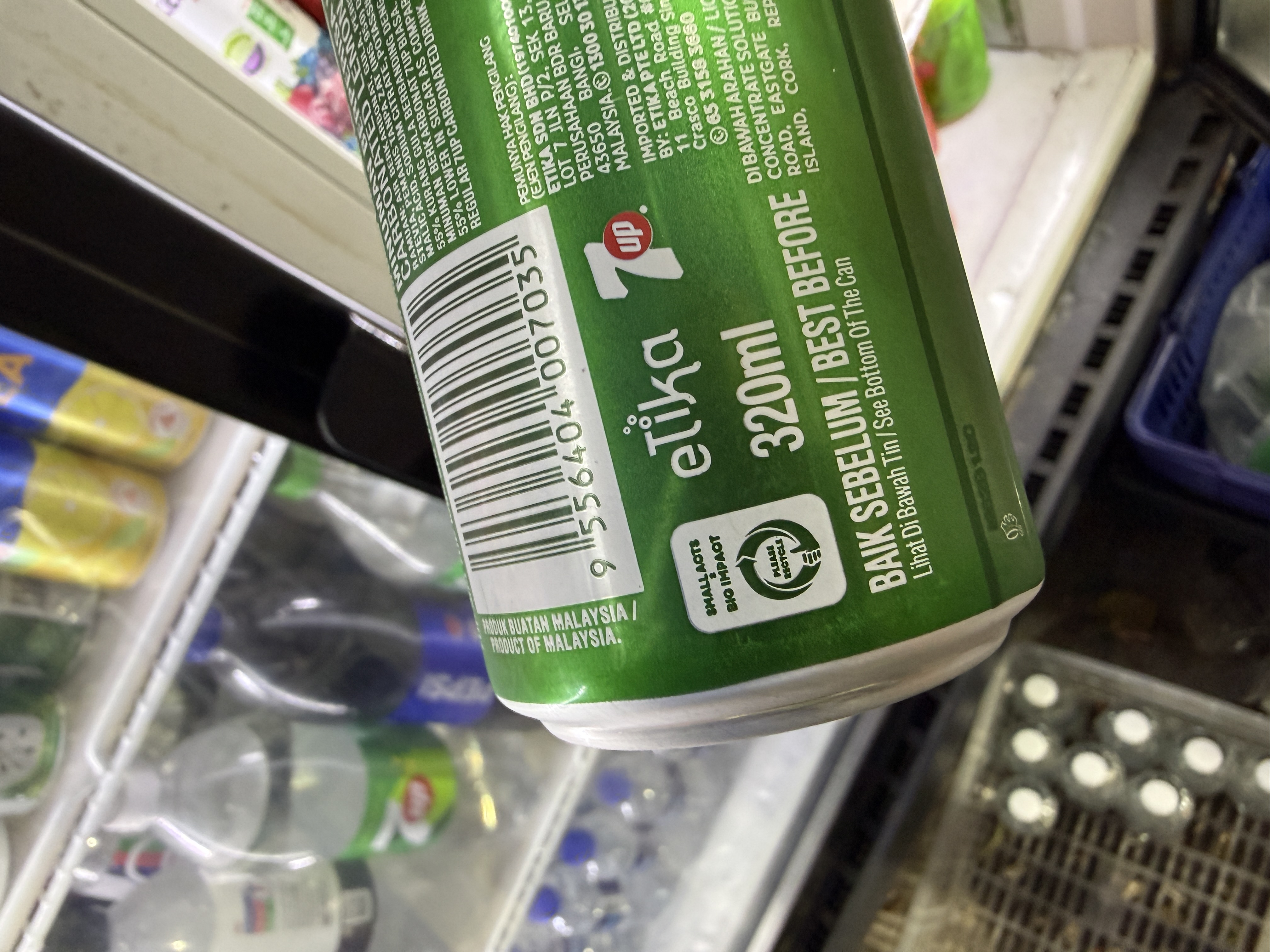 Photo via Mothership.
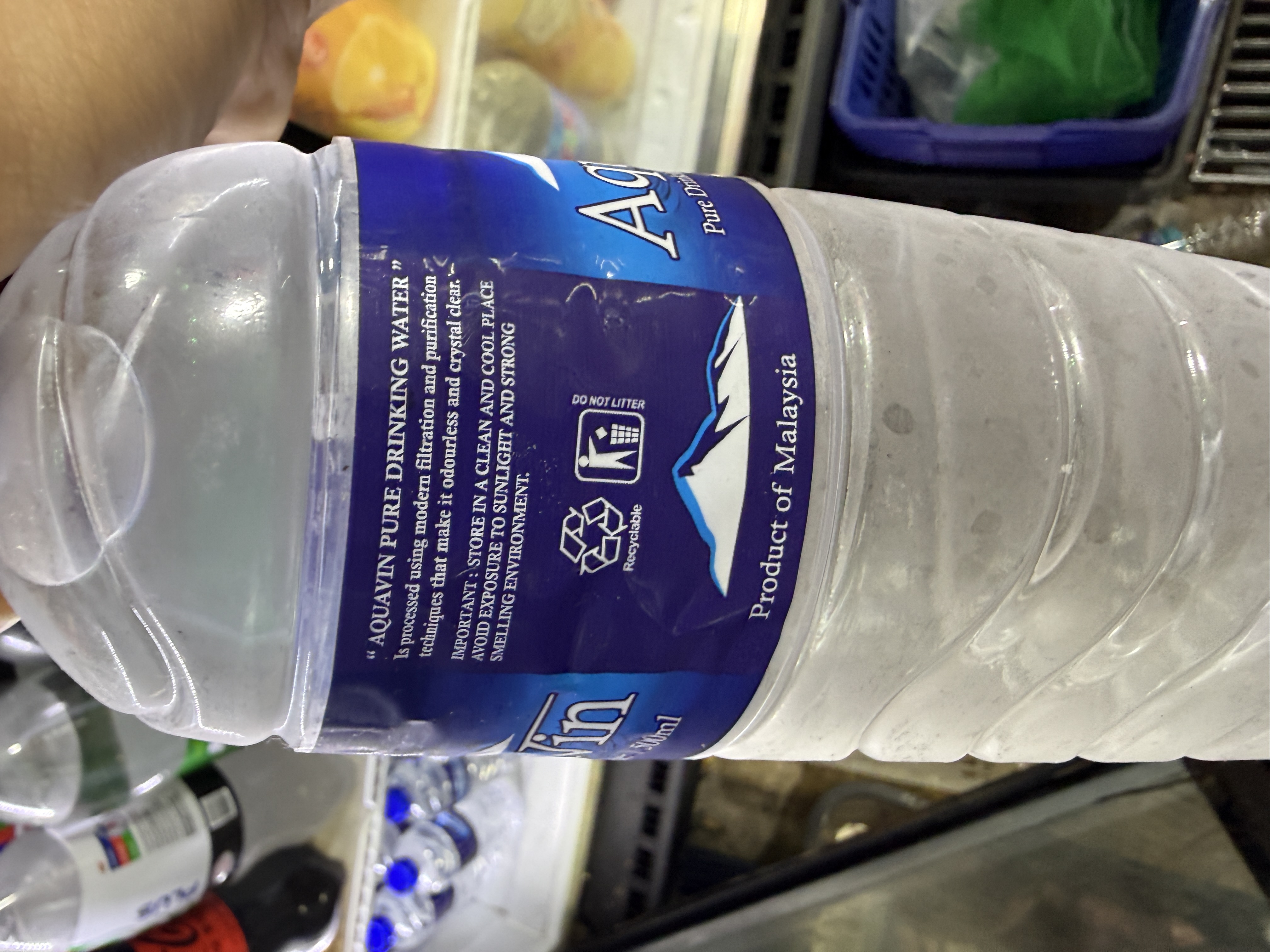 Photo via Mothership.
Why? Because beverage manufacturers and importers have to pay 10 cents into the scheme for each individual unit of beverage they sell in Singapore.
The 10 cents is then transferred to the retailer and, eventually, the consumer at the point of sale.
The logo indicates that the 10 cents has been paid into the scheme. No BCRS logo = no 10 cents paid = no refund at the machines.
For the first month, containers with the logo were rare due to the lead time needed for retailers or producers to clear their inventory of stocks without the BCRS logo.
BCRS machine
I snooped around convenience stores for bottles with the BCRS logo and was surprised to find it on a bottle of the popular Pokka iced lemon tea.
Two other bottles were FairPrice house-brand juices.
Armed with the three eligible bottles, I gave one of the machines a try.
Generally, an uneventful experience. A few screen taps later, I had 10 cents back in my wallet.
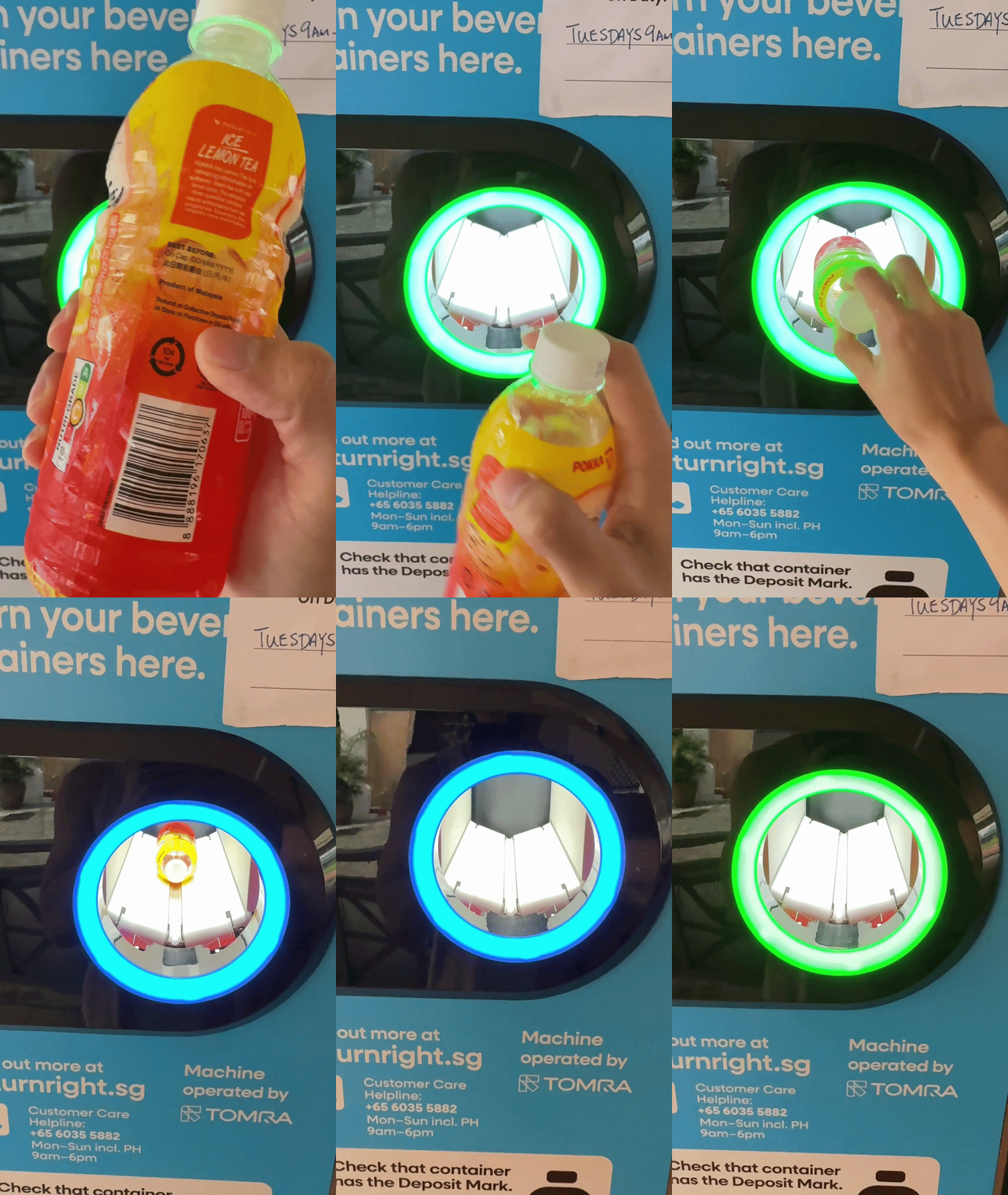 Gif via Mothership.
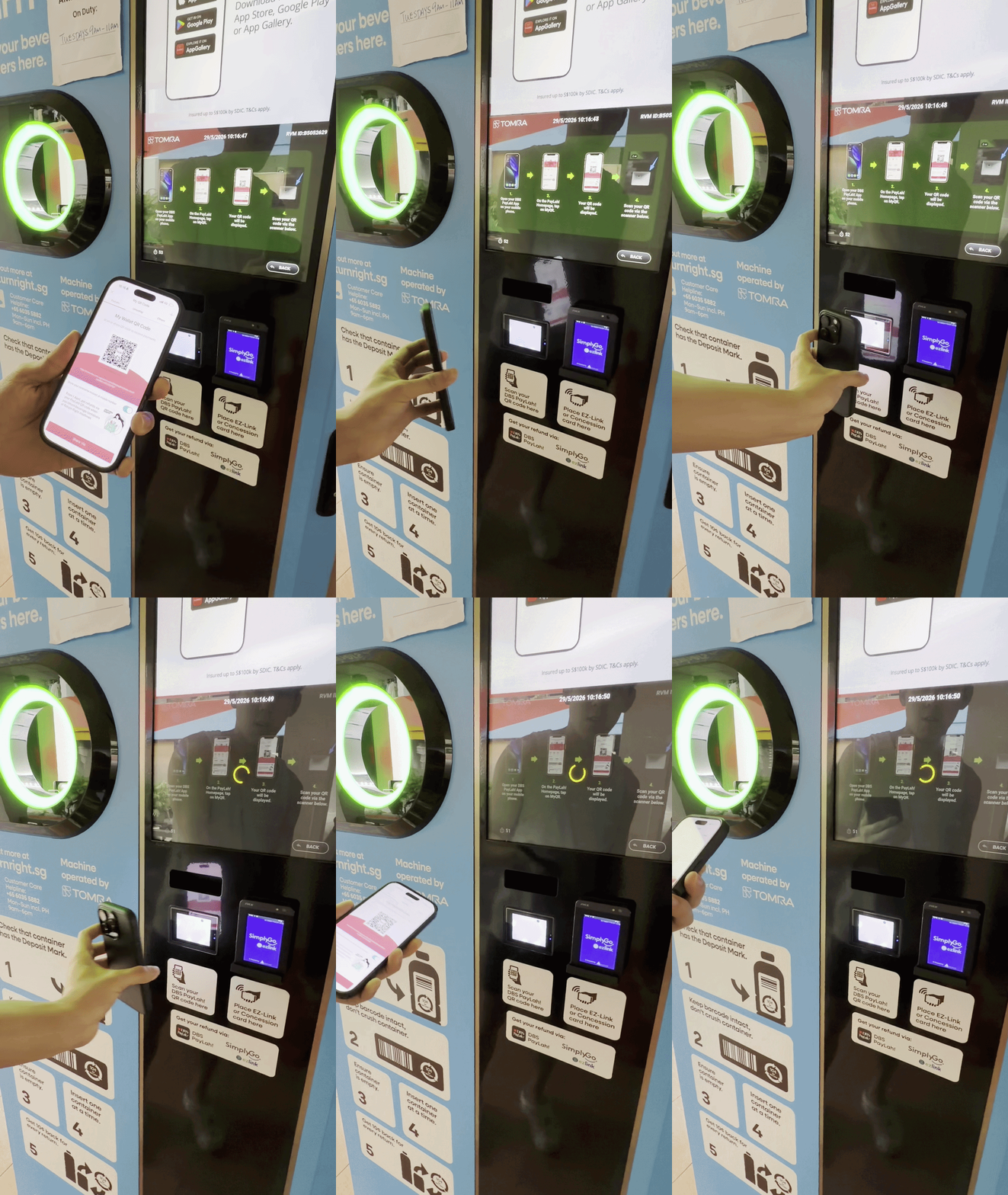 Gif via Mothership.
 Gif via Mothership.
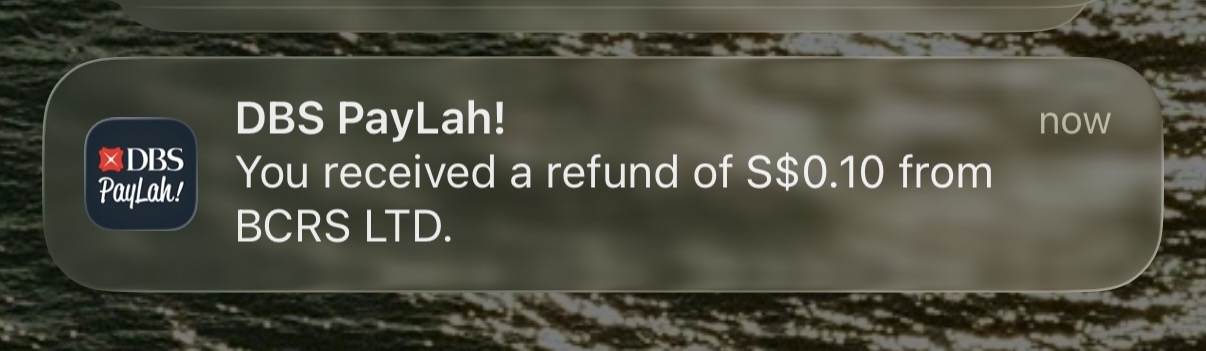 Screenshot via Mothership.
Of the three attempts I made, only one was unsuccessful, possibly because I inserted the bottle too quickly after I triggered an error.
The machine zipped my bottle away, but did not issue a refund.
A colleague of mine found that her bottle of Milo had the BCRS logo and similarly decided to use the BCRS machine for the first time.
Her primary concern? The cap was missing.
But things went without a hitch. So, caps not necessary.
Also, rinsing is encouraged but not required.
It's basically like a waste bin with some extra steps to get back your 10 cents.
Two weeks for 10 cents
It seemed like a world of trouble just to get my lost 10-cent refund, but money is money. So, I emailed BCRS Ltd., the scheme operator, about the unsuccessful refund.
I provided them with the details of my user experience, such as the location of the machine and whatnot.
They got back to me fairly quickly.
It took about a week from when I sent my email for the BCRS team to conduct their checks and gather my financial particulars such as bank name and bank account number.
My query was then forwarded to the BCRS finance team to process my refund.
The 10 cents was transferred to my account another week later. Altogether, it took about two weeks and two emails on my part.
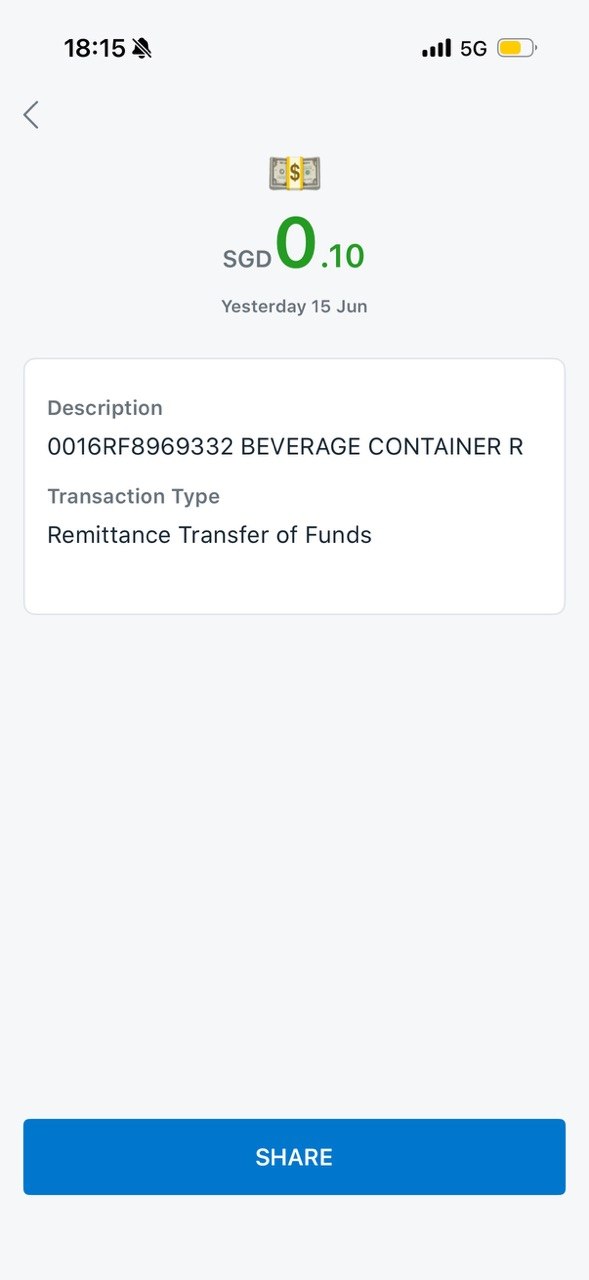 Screenshot via Mothership.
My little experiment started about two months ago.
Since then, I’ve used the machines whenever needed and the process has been much smoother, usually getting my 10-cent deposit back.
Struggle
The manual refund process on my end to get back my lost 10 cents was relatively uneventful — some emails here and there.
But two weeks for 10 cents? And with a seemingly manual process?
On top of that, I can see why some people, especially the older folks, might struggle with using the machine.
The process is easy, but it does include some steps that presume a familiarity with digital interfaces and technology.
For example, I can imagine a non-digital native struggling to find and present their PayLah! QR code, considering how this is not a feature commonly used by PayLah! users.
The user interface on the return machine is also admittedly not as intuitive, with multiple user inputs required. Some of these are not as obvious with the current interface design.
There's also the confusion over labels.
It doesn't help that some of the labels on current container packaging carry labels that suggest consumers could recycle the container at their local recycling facility. Naturally, this can be taken to mean at a BCRS machine.
Then there's habits.
As an example, I'm used to picking at the plastic wrapper on bottled drinks, which is also where the BCRS logo is printed on.
No wrapper, no refund. 10 cents gone forever. Anger and frustration.
It's also an odd experience, perhaps one that needs getting used to, to take a detour with an empty can (sometimes several) in my hand from the coffee shop to the nearest BCRS return machine to get the deposit refund.
If you ask me, all dine-in eateries should act as return points, rather than the buck being passed to the consumers, but that's a story for another time.
Additionally, there can be all sorts of hiccups that come with technology. Online, some users have reported the machine rejecting their container, despite the container having the BCRS logo.

So, how?
If things work as intended, returning bottles and getting the 10-cent deposit back via the return machines is generally straightforward.
My milo-drinking colleague agreed.
However, when things don't go as planned, as had happened to me and to some users online, it becomes a bit of a headache.
It also feels kind of ridiculous and comical at the same time, with the hoops everyone has to jump through just to get 10 cents back in such cases.
Giving chance
A quick summary of the two major pain points to me would be:
- What steps to take if it cannot be BCRS-ed
- The user experience at the machine
The scheme's transition period runs from now until Sep. 30, 2026.
After this transition period, all beverage containers on the shelves in Singapore are legally required to carry the BCRS label.
Confusing labels or not, all beverage containers sold in Singapore should technically be refundable after Sep. 30. No more disappointment, as the elderly man experienced in that one news article.
Red tape rarely gets thinner, especially with so many parties involved.
Also, from October 2026, all of us will have to use the machines. More users also mean more chance that something goes wrong.
Which might be a good incentive to cut down on initial hiccups and improve the user experience.
I reached out to the BCRS team to ask if they have any plans for tweaks going forward.
In response to the queries, a BCRS Ltd spokesperson said, "We treat every manual refund case as a learning opportunity. Each one highlights where our systems can be made more robust as we roll out improvements in phases. "
The spokesperson noted that the majority of container returns and digital refunds are successfully processed at the Return Right machines.
"In the case of unsuccessful refunds, the time required to verify the transaction varies based on the availability of details provided by the public, such as the machine location, date, approximate time, or photos of the transaction," the spokesperson continued.
"Members of the public who encounter issues with the return process can submit their transaction details to [email protected] so our team can assist to resolve them," the spokesperson advised.
We should want it to work
With Singapore's only landfill, Pulau Semakau, piling up and estimated to be full by 2035, there's an urgent need for us to divert our waste streams away from it.
Recycling is one way, but Singapore's recycling rates have been struggling to take flight.
In 2025, with just five years left to meet the 70 per cent by 2030 target, it stood at 52 per cent.
Reasons include increasing costs in the recycling trade, as well as contamination of recyclables, Senior Minister of State for Sustainability and the Environment Janil Puthucheary explained.
The 2030 target, part of the government's 2030 Zero Waste Plan, will be reviewed.
The beverage container return scheme is a laudable attempt to reshape habits and further entrench the norm of recycling in our everyday lives.
We should want it to work. I do want it to work.
And as consumers, we can (and should) do our part and adapt.
But if the system itself doesn't hold up or isn't made more seamless for the everyday person, it will end up adding friction to people's lives and, ultimately, turn them away from recycling and the scheme itself.