Environment


78% of S'pore households recycle in 2025, up from 72% in 2023
Awareness of what can be recycled, such as certain common household items, has also grown.
June 17, 2026, 10:14 AM
Top image via NEA


Singapore's overall recycling rate rose slightly to 52 per cent in 2025, up from 50 per cent in 2024, according to the National Environment Agency's (NEA) waste and recycling statistics for 2025.
Each person generated 0.83kg of domestic waste per day in 2025, a 21 per cent reduction from the 1.06kg recorded in 2015, and a slight improvement from 0.85kg in 2024.
 Top image via NEA
More households recycling
The domestic recycling rate remained at 11 per cent for the second consecutive year.
Domestic waste refers to waste from households, shophouses, petrol stations, hawker centres, educational institutions and places of worship.
The non-domestic recycling rate fared better, rising slightly from 65 per cent to 67 per cent.
NEA's 2025 survey also found that the 78 per cent of households, up from 72 per cent in 2023.
Awareness of what can be recycled, such as certain common household items, has also grown.
For example, 92 per cent of respondents know that a rinsed shampoo or detergent bottle can be recycled, compared to 89 per cent in 2023.
Rising freight costs
On the other hand, recycling rates for key waste streams like paper/cardboard and plastics declined slightly, with NEA attributing this to rising freight costs and volatile global commodity prices.
Since most of Singapore's recyclables are exported overseas for processing, the viability of these exports remains susceptible to external market conditions.
 Top image via NEA
Singapore's food waste recycling rate also remained stable at 18 per cent.
What's being done
NEA said it will focus recycling efforts on food, paper/cardboard, and plastics, which make up the largest share of waste that is still not recycled.
Since December 2025, Public Waste Collectors have been working with town councils and trade premises to set up dedicated paper/cardboard collection points, aimed at addressing issues like overflowing recycling bins and contamination of recyclables.
Food waste segregation requirements, currently mandatory for new large commercial and industrial buildings since March 2024, will be progressively extended to existing buildings from 2028, in tandem with the completion of the food waste treatment facility at Tuas Nexus.
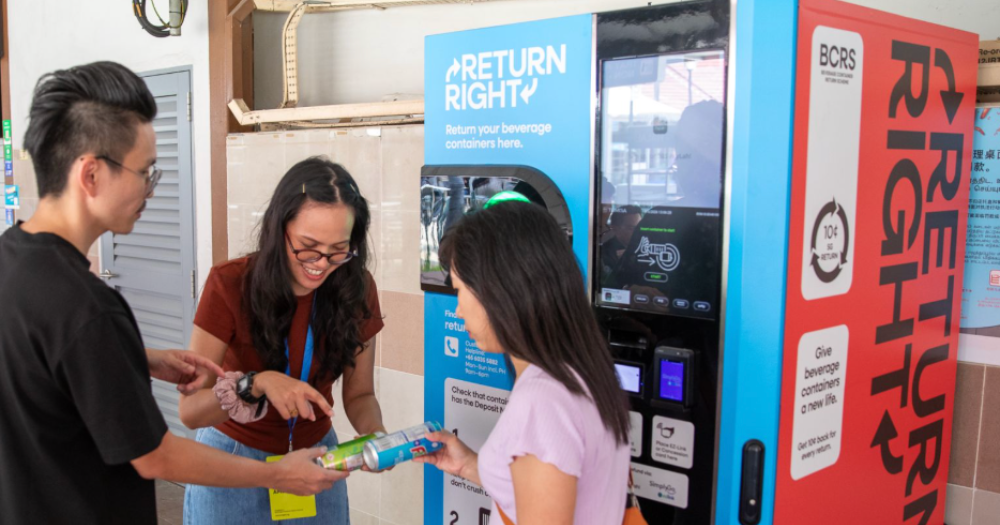
The Beverage Container Return Scheme, which is currently in its transition period and will be fully operational from Oct. 1, will further support clean stream collection of metal and plastic beverage containers for recycling.
NEA also said it will be reviewing the 2019 Zero Waste Masterplan to assess progress and refresh strategies to encourage the 3Rs, Reduce, Reuse and Recycle, with the aim of extending the lifespan of Semakau Landfill.