Environment


Preparatory works for Long Island coastal protection project to begin at ECP in end-2026
The first phase will cover waters west of Bedok Jetty.
June 30, 2026, 02:38 PM
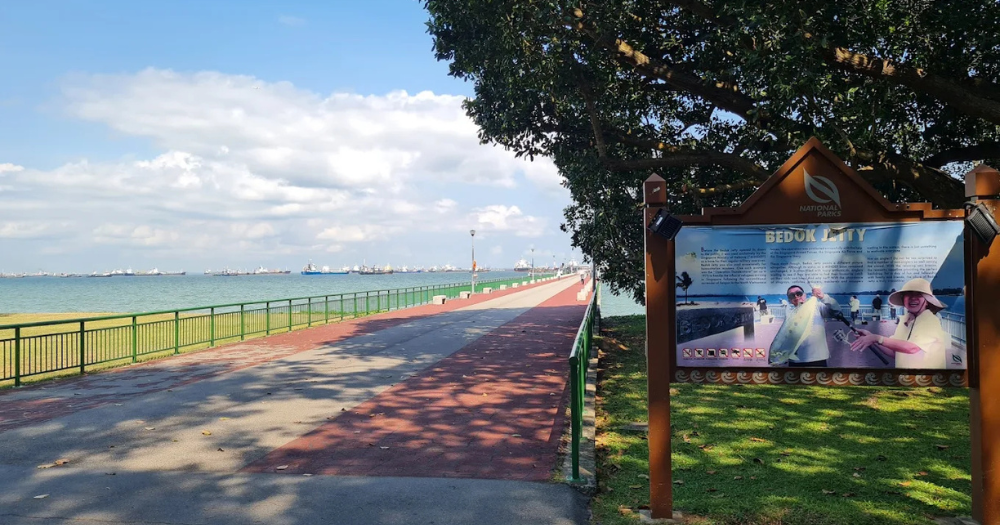
Photo from Nobert Ritter/Google Maps.


Preparatory works for 'Long Island', the country's large-scale coastal protection project, is set to commence from the end of 2026.
The project is a key coastal protection measure aimed at mitigating the risks of rising sea levels and protecting low-lying coastal areas.
Singapore's Housing and Development Board (HDB), the appointed reclamation agent for the project, will implement mitigation measures based on findings from an Environmental Study to minimise the impact of the preparatory works on the environment and community.
The government also remains committed to engaging stakeholders on the planning and design of 'Long Island' before reclamation plans are finalised, said the Urban Redevelopment Authority (URA).
Works to be carried out in phases
In a joint press release on Jun. 30, HDB and URA said preparatory works are necessary to lay the groundwork for future land reclamation, given the scale of the project.
The works will also support the swift implementation of 'Long Island' to strengthen Singapore's resilience against climate change and meet the country's needs.
The preparatory works will take place in waters off the East Coast, at least 130m away from the shoreline, reported CNA.
It will mainly involve removing seabed obstructions, followed by the construction of temporary sand bunds and sand infilling.
The work areas will be located at least 130m from the shoreline and will be clearly demarcated with silt screens or floating barriers.
There will be two phases of preparatory works.
The first phase, scheduled to begin at the end of this year, will cover waters west of Bedok Jetty across an area of approximately 570 ha.
It will span around 7km in length and up to 1km in width.
The second phase, covering around 155 ha east of Bedok Jetty, will commence only after major sporting events such as the 2029 Southeast Asian (SEA) Games have concluded.
While preparatory works are ongoing, the beaches along East Coast Park will remain open to the public.
Visitors can continue to access the beaches for near-shore swimming, while jogging and cycling paths will remain open.
However, sea users are advised to keep a safe distance from marine vessels and designated work areas, which will be cordoned off for safety.
Safety advisories will be displayed at East Coast Park and on agencies' websites.
 Photo from URA & HDB.
Environmental study
A study on the potential impact of preparatory works on the environment and the community was commissioned by HDB and began in February 2025.
Conducted by DHI Water & Environment, the study found that the works are not expected to cause significant changes to water quality, which is projected to continue meeting Singapore's prevailing marine water quality standards, CNA reported.
Nature groups were consulted, with their feedback used to refine the study's scope.
Some of the key findings and mitigation measures include:
- Slight localised changes to currents and waves are expected near Bedok Jetty, but will have minimal impact on existing water-based activities;
- Near-shore activities, including swimming, can continue along the entire stretch of the East Coast;
- Sand infilling may result in intermittent sediment plumes and dust, leading to minor visual and air quality impacts. Silt screens will be deployed to contain sediment, while dust levels will be closely monitored; and
- Some coral and seagrass beds near the work site may experience temporary and localised impacts from increased sediment. However, most coral reefs and seagrass habitats in the surrounding area, including those at Sisters' Islands Marine Park, are expected to remain largely unaffected.
According to CNA, HDB said seagrass habitats are generally resilient to temporary increases in water turbidity and are expected to recover without long-term degradation.
HDB further added that there are no sensitive coral communities or intertidal habitats within the preparatory works footprint, and mobile marine species like fish are expected to move away from active work areas.
Macrobenthic communities, including seabed-dwelling organisms such as worms, marine snails and clams, will be displaced within the sand infilling areas.
However, the affected area is relatively small compared to similar habitats in surrounding waters, and recovery is expected outside the work footprint, said HDB and URA.
The agencies also said turtle nesting activities at East Coast Park may be affected, though the nesting grounds east of Bedok Jetty will remain accessible during the first phase.
The National Parks Board's (NParks) ongoing turtle egg relocation programme to Sisters' Islands is expected to support hatchling survival over the longer term.
Some sea sports users affected
According to the joint release, some sea sports users will be affected due to a temporary reduction in available sea space along East Coast.
The agencies said kiteboarding will experience the greatest impact, while other water sports are expected to face minor to moderate disruptions.
Speaking to CNA, Sport Singapore (SportSG) said East Coast Park remains an "important recreational space with shared memories".
It added that agencies will continue working closely with affected groups to identify alternative locations for their sport activities, including waters east of Bedok Jetty during the interim period, as well as other sites around Singapore.
In the long term, SportSG said the future reservoir and Long Island coastline could potentially accommodate a range of water sports and recreational activities, though this is subject to ongoing technical studies.
An Environmental Monitoring and Management Plan will also be implemented throughout the preparatory works to monitor water quality, suspended sediment levels, noise and dust.
The full Environmental Study report will be available for public feedback for four weeks from Jun. 30.
Detailed design and plans still being refined
HDB and URA emphasised that the areas designated for the preparatory works do not represent the final land profile of Long Island.
Detailed planning for the project, including its final reclamation profile, will continue to evolve through ongoing technical studies and future public consultations, they said.
The main reclamation works will only begin after the relevant studies have been completed, mitigation measures finalised, and feedback from public engagements incorporated into the plans.
Agencies will also continue to engage Singaporeans and stakeholders on the project's planning and design over the next few decades.
Building on ideas gathered from more than 14,000 participants so far, the next phase of public engagement will begin from the end of 2026.
The discussions will focus on strengthening Singapore's flood resilience, supporting sustainable development, as well as ensuring Long Island remains adaptable to the evolving needs of future generations.
Singaporeans will also be invited to share their views on potential recreational uses for the future coastline and reservoir as part of efforts to "shape a shared vision" for Long Island.