Abroad


Alan Greenspan, former Fed chairman, dies aged 100
He held the post for nearly 20 years.
June 23, 2026, 12:28 AM
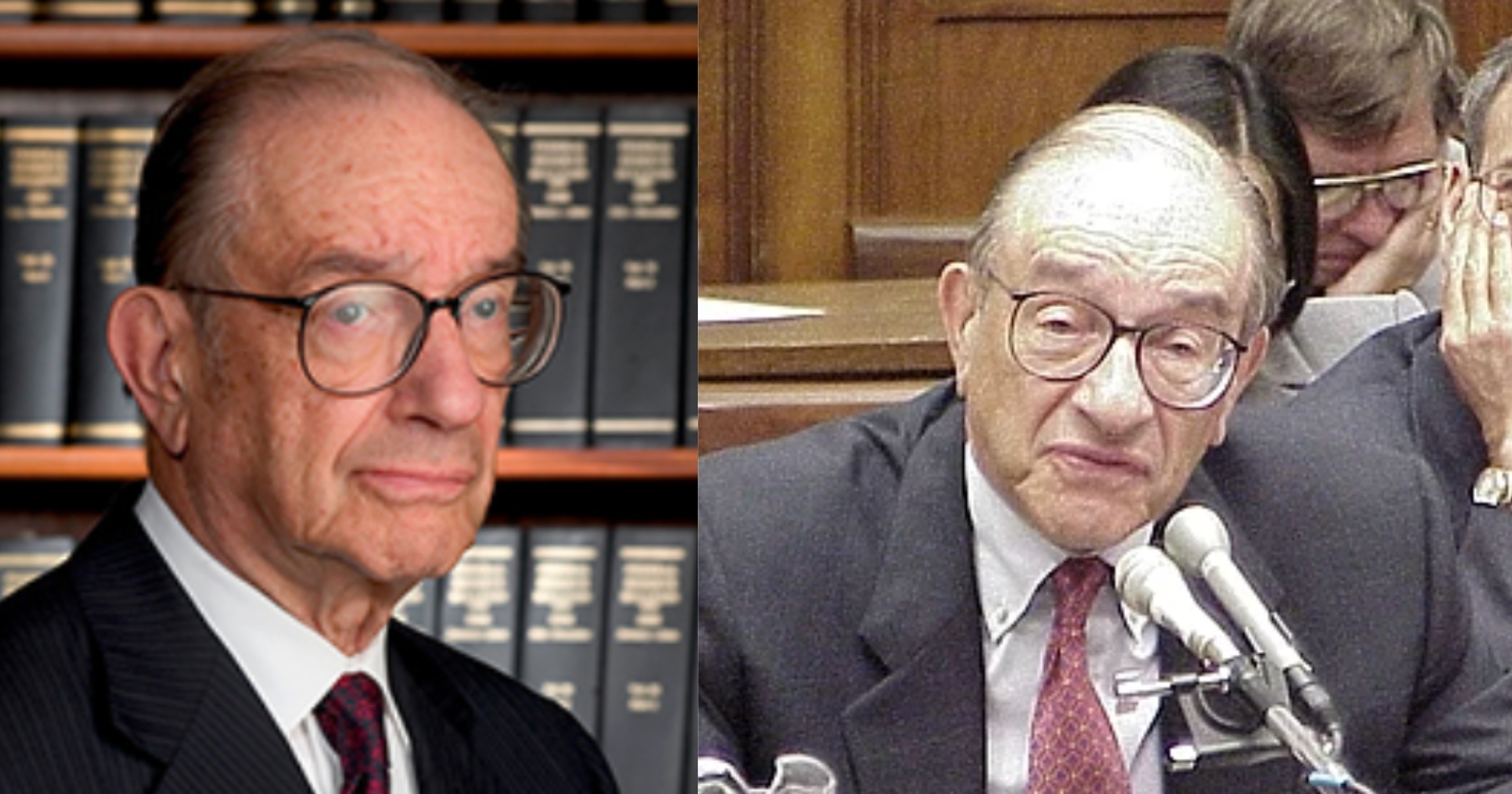
Images via Federal Reserve History, Wikipedia


Alan Greenspan, the U.S. Federal Reserve's former chairman, died aged 100 on Jun. 22, 2026.
He died from complications of Parkinson's Disease, according to BBC and NBC News.
He had earlier become a centenarian in March 2026.
Greenspan's wife, Andrea Mitchell, called her husband "a giant of a man" in a statement.
It added that he "helped shape the U.S. economy for decades under presidents of both parties, but was always honest in acknowledging his mistakes".
Safeguarding economy
As the chairman of the Federal Reserve from 1987 to 2006, he had the responsibility of safeguarding the U.S. economy and "keeping the dollar sound" for almost two decades, BBC reported.
It is the U.S. central bank, created by the Federal Reserve Act of 1913 to establish a monetary system to respond effectively to stresses in the banking system, its website states.
His post was said to be the second most important after the presidency, according to BBC, adding that he oversaw the longest sustained period of U.S. economic growth in that generation.
Financial Times reported that according to the late John McCain, the former Republican senator from Arizona, Greenspan's role was so critical that if he died in office, he should be "propped up and kept in charge".
Previous roles
Prior to becoming chairman of the Federal Reserve, Greenspan worked as an economic consultant before becoming a board member of banking institution JP Morgan.
FT reported that after offering Richard Nixon economic advice and polling analysis during his presidential election campaign, Greenspan later became chairman of Gerald Ford's Council of Economic Advisers.
In the early 1980s, former U.S. president Ronald Reagan appointed Greenspan to chair a commission considering reforms to the public pensions system.
Reagan then promoted him to chairman of the U.S. Federal Reserve in August 1987.
1987 stock market crash
Shortly after, Greenspan was faced with the October 1987 stock market crash.
According to BBC, though this saw more than 30 per cent wiped off share prices, his handling of the situation was described as "astute".
Noting that his facilitation of cheap credit helped keep banks afloat, BBC reported that Greenspan's approach was used whenever markets were in crisis.
Downturn in housing market
However, his policy of low interest rates was said to have fuelled a sharp rise in house prices and over-enthusiastic selling of mortgages by banks.
The New York Times reported that at one point, he was blamed by a group of critics for not heading off a housing bubble by pushing interest rates higher.
Despite that, Greenspan's contributions saw him receiving an honorary knighthood from Queen Elizabeth II.
In 2005, former U.S. president George W. Bush handed him the highest civilian award in the U.S., the Presidential Medal of Freedom.