




News


PM Wong addresses 'S'pore-washing' concerns, says there's 'genuine investments' from China & can't conduct enforcement for America
This is a 'real concern' for Singapore, he said.
November 22, 2026, 11:54 AM
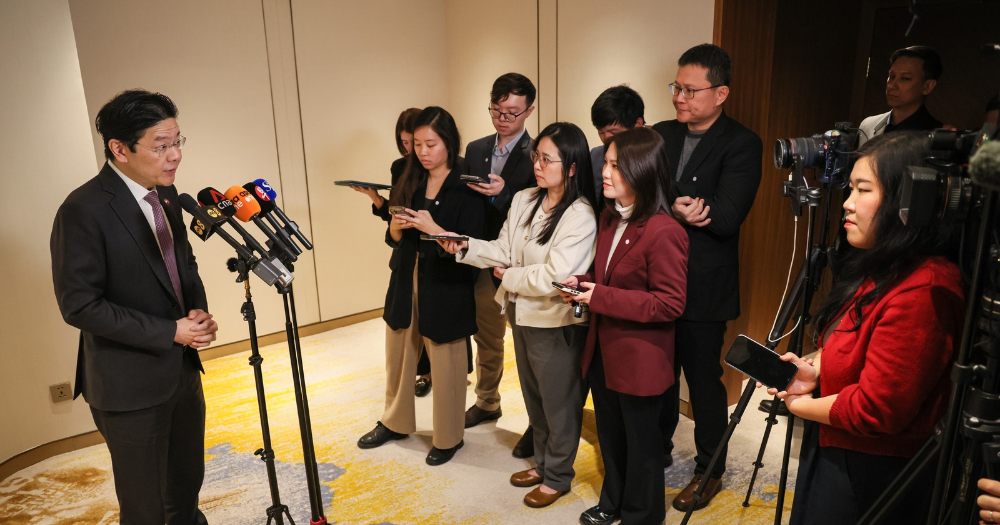
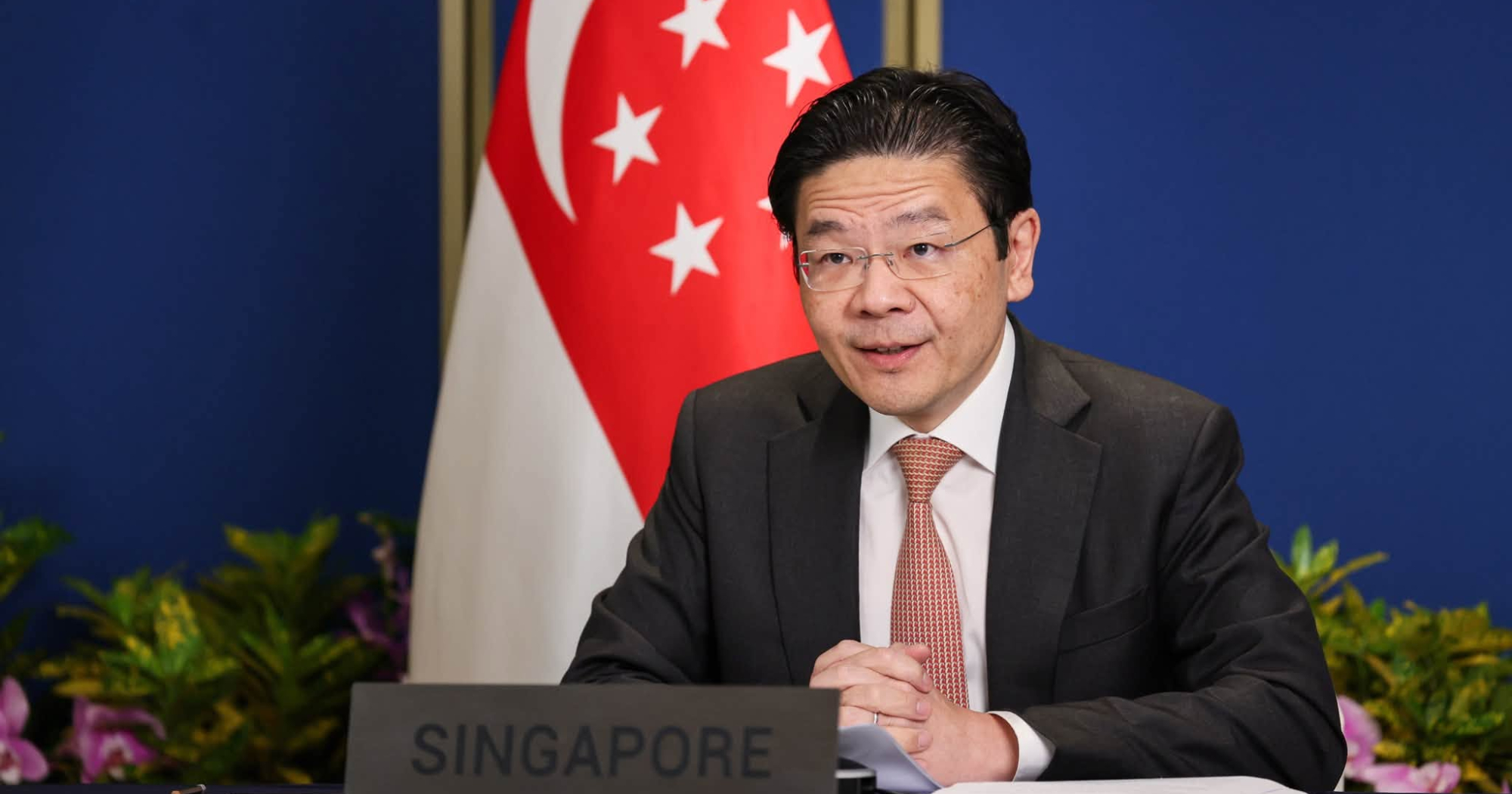
Photo from Ministry of Digital Development and Information (MDDI).


Singapore is attracting "genuine investments from China", which adds value to the economy and creates jobs for Singaporeans.
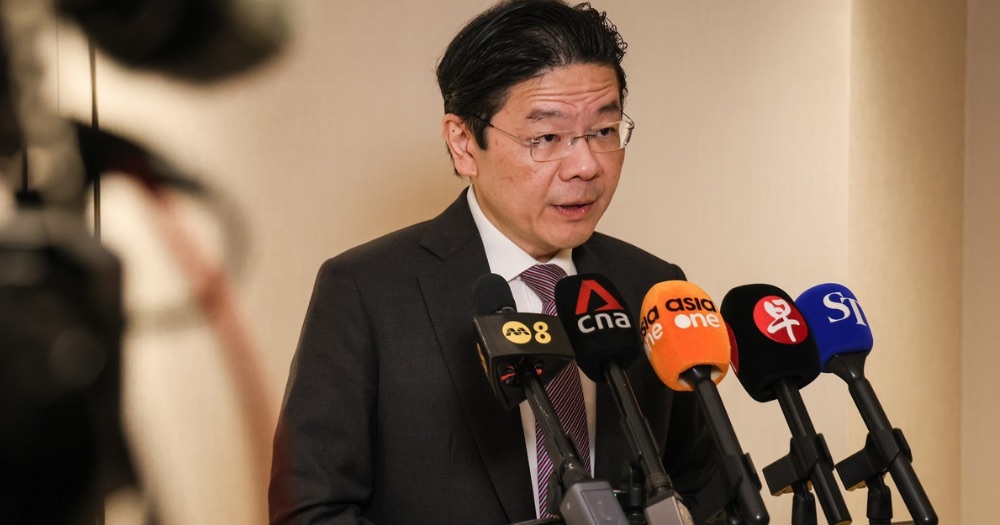
But "abusing Singapore's trusted position" by using the country to circumvent export controls of other countries is a "real concern", Prime Minister Lawrence Wong told Singapore media in Beijing on Nov. 21 during the wrap-up of his official visit to China, where he also spoke about Singapore's place in an increasingly multipolar world.
Concerns about 'Singapore-washing' arose after the Nvidia-Megaspeed controversy, where it was alleged by the U.S. that Singapore-based firm Megaspeed was importing advanced Nvidia chips not for actual use, but to be rerouted to China.
Its former executive Alice Huang, who came under the spotlight after Nvidia CEO Jensen Huang was accused of having an affiar, has been banned from reentering Singapore.
Reassuring the U.S.
Wong pointed to the issue of Nvidia chips passing through Singapore, saying that his government has explained to the U.S. its position.
When chips enter Singapore and are deployed within Singapore, the government has "visibility" over how these chips are used and can facilitate checks to ensure that they are being used properly, Wong said.
However, he noted that the real concern has to do with chips that are registered for sale in Singapore, but are re-exported to other countries.
Wong admitted that the volume of such trade is "not small", and is in fact far bigger than that of chips that are actually being used in Singapore.
Even though it is understandable why the U.S. is concerned, it is a rather complex situation, Wong added, saying that Singapore does not have control over the end users, and such cargo often does not land in Singapore, but goes through to other destinations.
This gives Singapore no jurisdiction or visibility over how these chips are used in other countries.
Singapore also cannot conduct enforcement for the Americans.
Wong said: "We cannot enforce on their behalf, especially not in these other countries."
But Singapore can share information and let the countries do their own enforcement, he added.
Wong also said: "What matters to us is that we are able to get the chips we need for Singapore's legitimate needs."
"And given our strong, enduring relationship with the U.S., I believe we will be able to do so."
Work with both sides
Speaking about the U.S. and China's relations with regards to AI and tech, Wong said what they do is "between the two of them."
He said he hopes they can find ways to cooperate and discuss about issues like AI safety.
Such issues are "global", and "not something that individual countries can address alone".
Singapore's goal is to "stay friends with both sides and be able to do business with both sides," Wong said, pointing to the "very good meetings" he had with U.S. President Donald Trump and Chinese President Xi Jinping in Manila and Shenzhen.
He added that both sides understood Singapore's position.
"So long as the two superpowers do not collide with one another, and I do not believe the two leaders will, there will be space for Singapore to navigate this complex environment and to make a good living for ourselves," he said.