



Features


From partners to pawrents: what it's like caring for S'pore K-9 dogs on & off duty
Different duties, same good boys.
November 10, 2026, 06:44 PM
From sniffing out narcotics to maintaining public order, Singapore's police K-9s undergo extensive training to serve alongside their human handlers.
But beyond their police duties, these dogs also have their own personalities, habits, and relationships with the people who care for them.
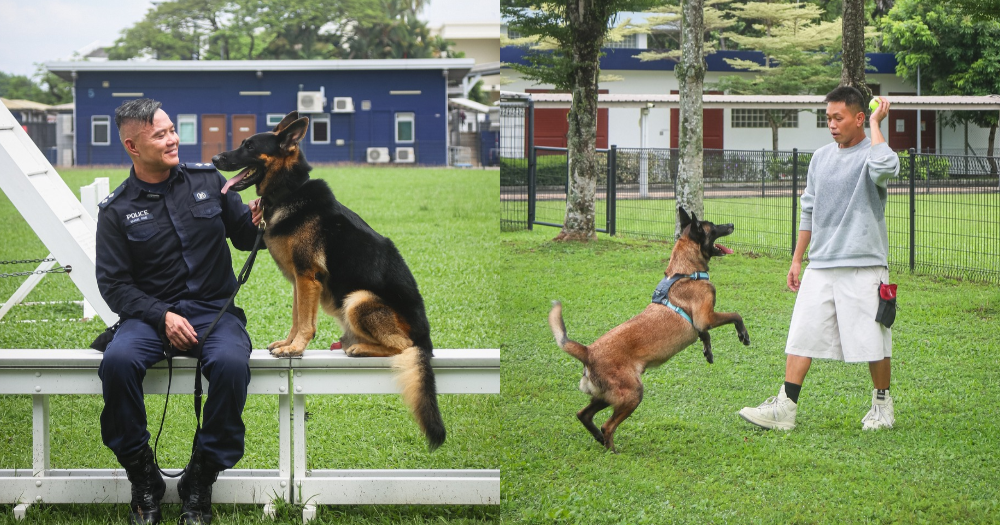
For Inspector Samuel Shue, 47, that means building a working partnership with his four-year-old German Shepherd, Jango.
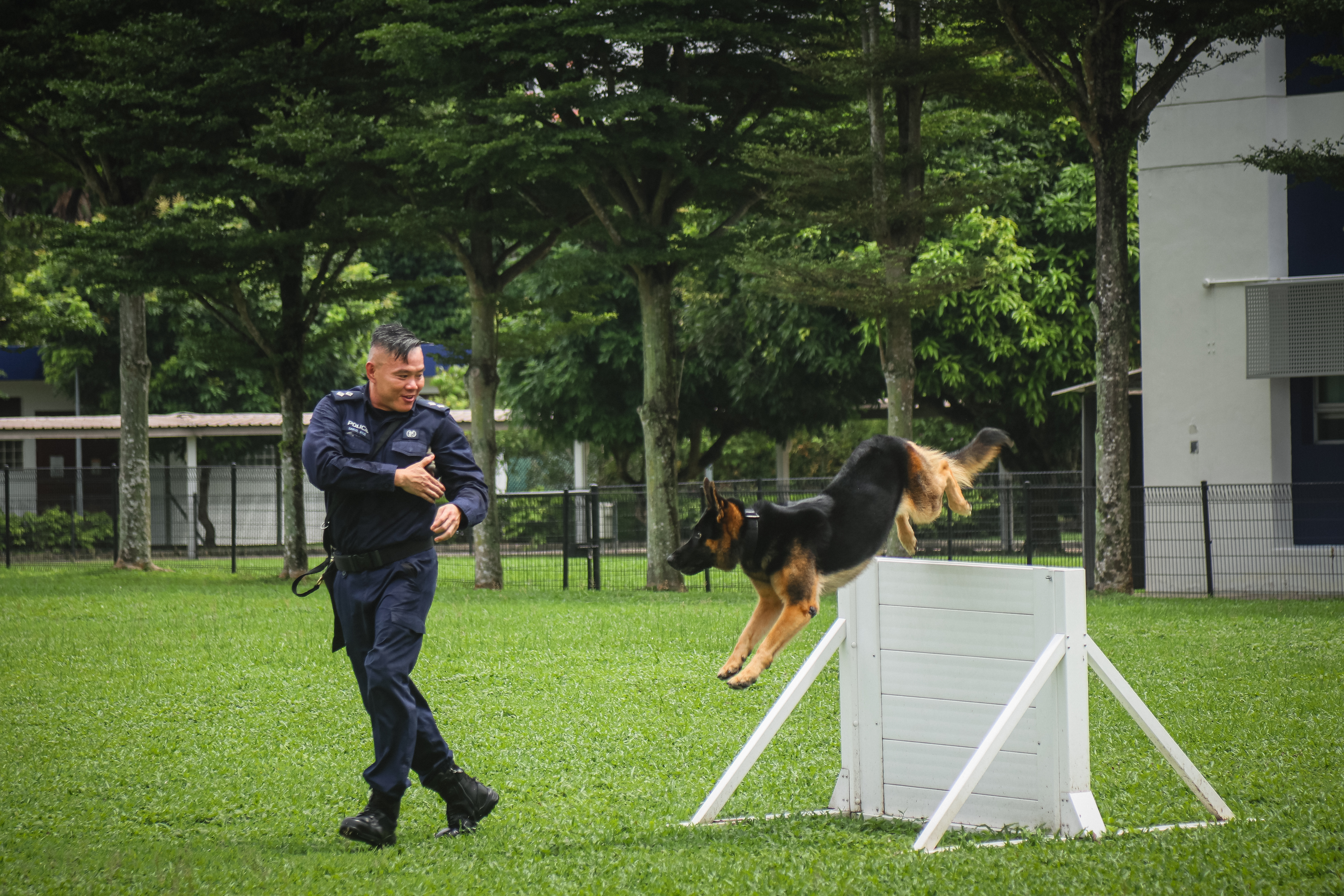 Photo by Thecla Li/Mothership
Meanwhile, 42-year-old fashion designer Max Tan has been helping Dodger, a seven-year-old retired Belgian Shepherd, settle into a quieter life at home.
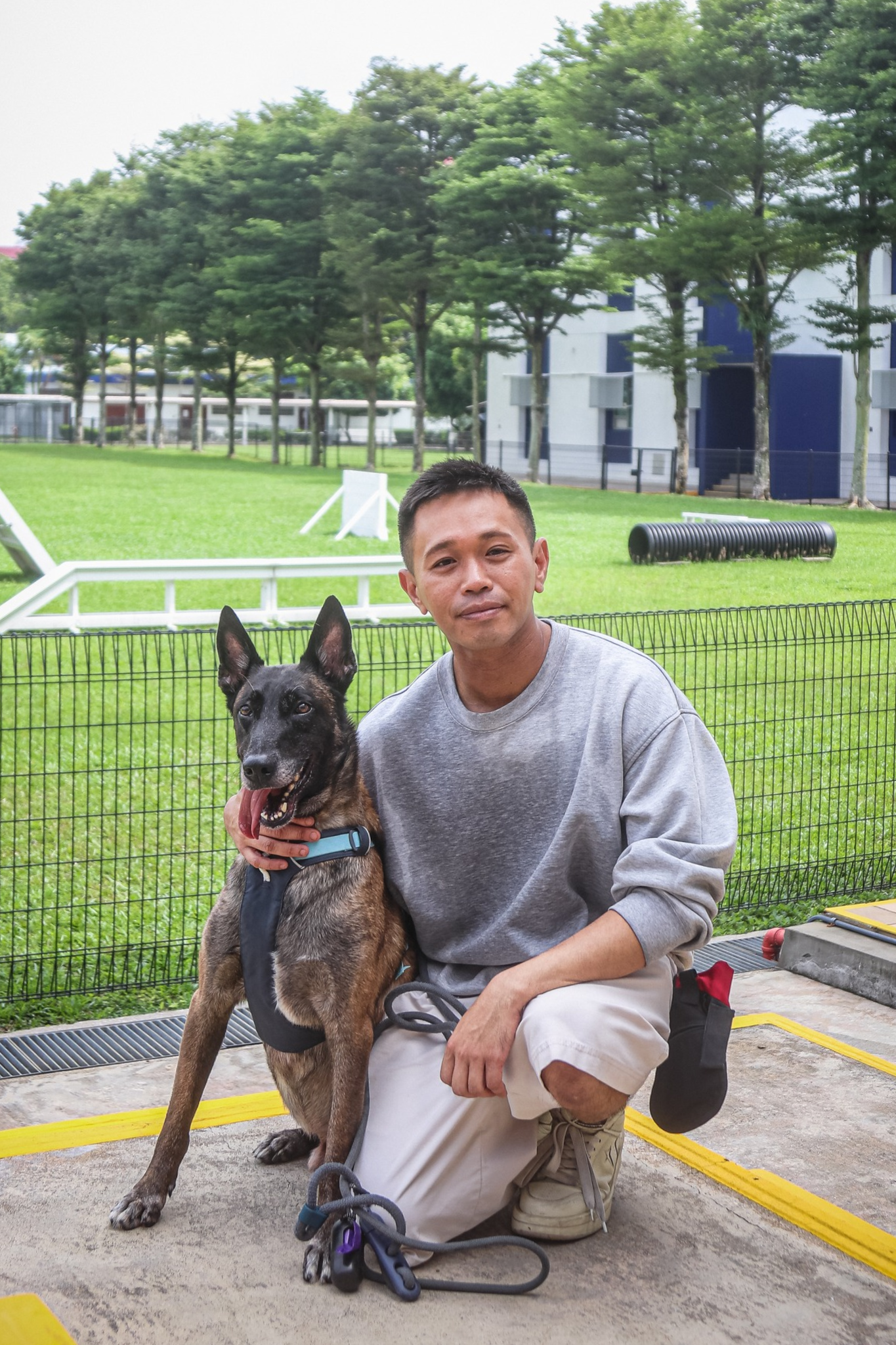 Photo by Thecla Li/Mothership
Mothership visited the unit headquarters to find out more about what life is like caring for these four-legged officers, both on and off duty .
Learning to understand man's best friend
Shue has spent 26 years with the Singapore Police Force (SPF), working with several police dogs in the K-9 Unit throughout his career.
But his first experience as a handler was far from smooth sailing.
Shue recalled that his first police dog had a difficult history and even bit him several times during their initial training.
For Shue, who was then new to handling police dogs, the experience was intimidating.
However, as he spent more time with the dog, Shue gradually learnt to recognise what triggered his behaviour and how to work around it.
The experience taught him an important lesson that would stay with him throughout his career.
"Building [a] bond with dogs, it's actually a bit like bringing up children," Shue reflected.
Every dog has its own personality, he explained, and handlers need time to understand their behaviour, just as the dogs learn to understand theirs.
Meet Jango, his current partner
Today, Shue works alongside Jango, a German Shepherd trained for public order and security duties.
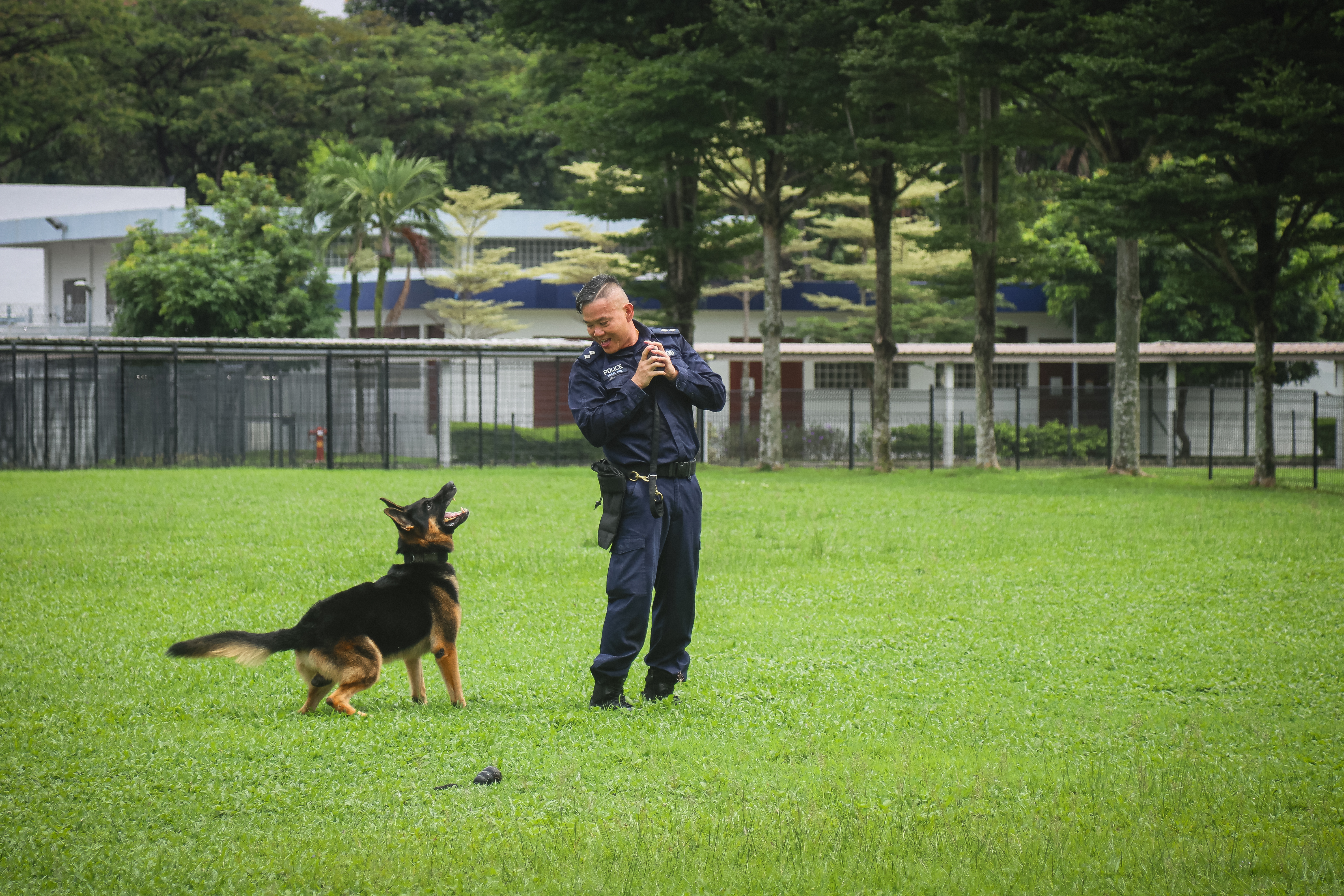 Photo by Thecla Li/Mothership
The pair have been working together since 2024.
Despite common perceptions of police dogs as aggressive, Shue described Jango as sociable, friendly, and fond of human company.
As it turns out, the pair also share the same birthday, something Shue only discovered after noticing the date on Jango's name tag.
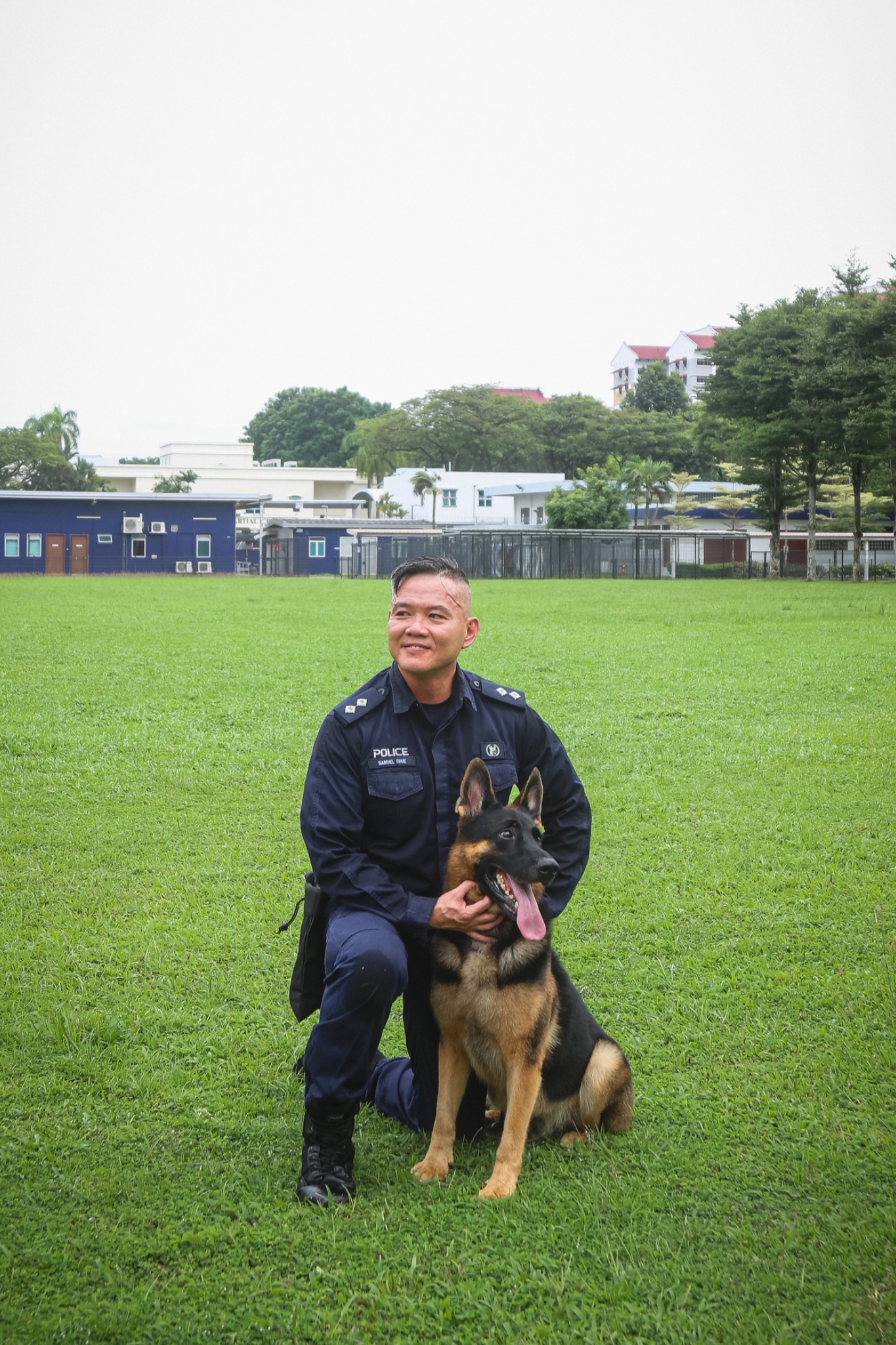 Photo by Thecla Li/Mothership
Their personalities, however, are quite different.
While Shue described himself as indecisive, Jango is quite the opposite–a very focused dog, whether at work or play.
And while Jango is still very much on duty, other police dogs have already begun the next chapter of their lives.
Adjusting to life after service
For Dodger, retirement has meant trading police duties for walks and plenty of time lounging around.
Earlier this year, he was adopted by Tan, a local fashion designer with a soft spot for senior and rescue dogs.
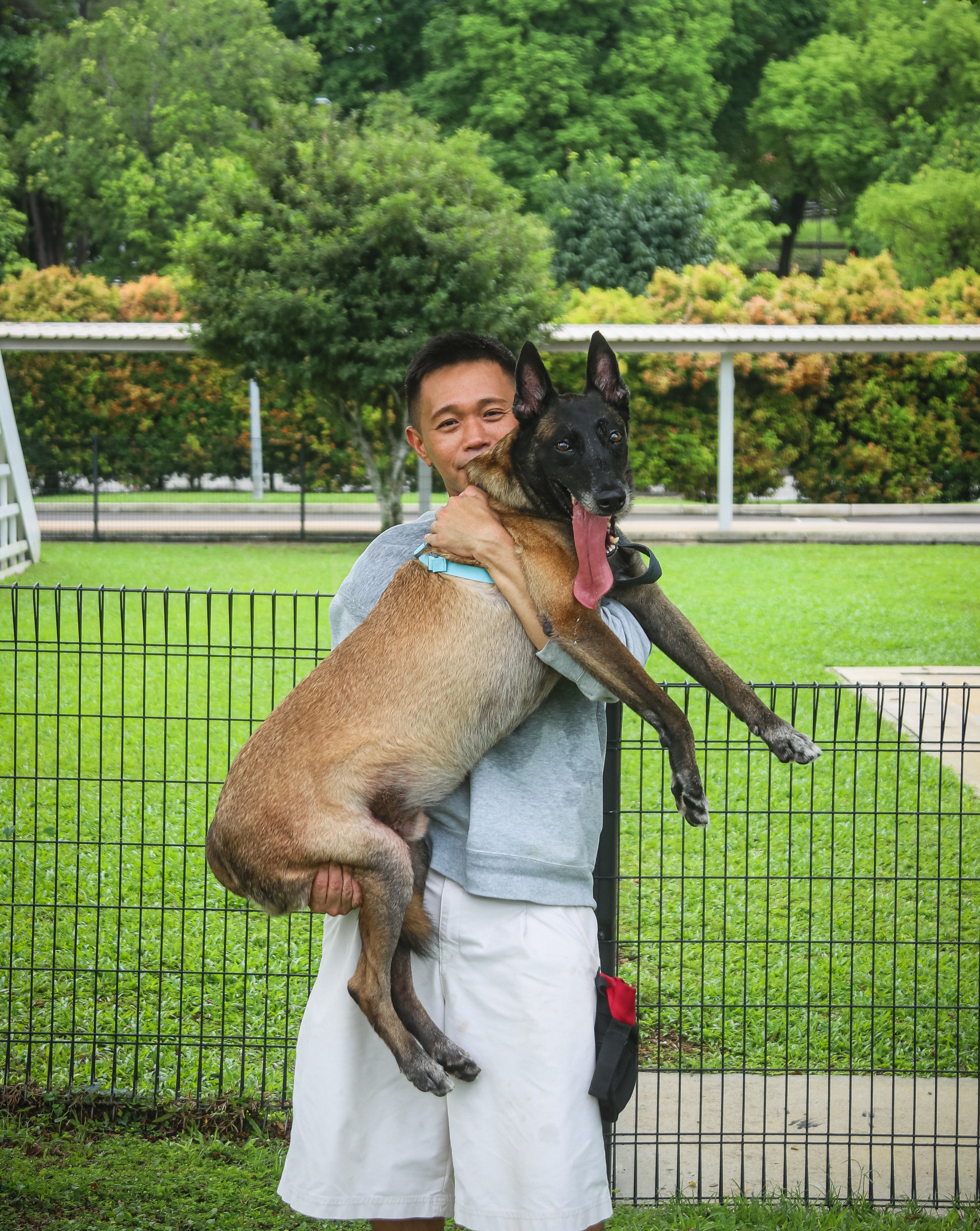 Photo by Thecla Li/Mothership
Dodger is the second retired police K-9 Tan has adopted, following the death of his first earlier this year.
But bringing Dodger home came with its own challenges.
"I don't think he knows the concept of retirement," Tan joked.
Tan recalled that on Dodger’s first day home, he was friendly towards almost everyone, including Tan's family and friends.
Everyone, that is, except Tan himself.
“He probably thought I was the one who took him out of his home over here, and I was a bad guy.”
Through a routine of daily walks, meals and plenty of belly rubs, Dodger gradually warmed up to Tan over the next three weeks.
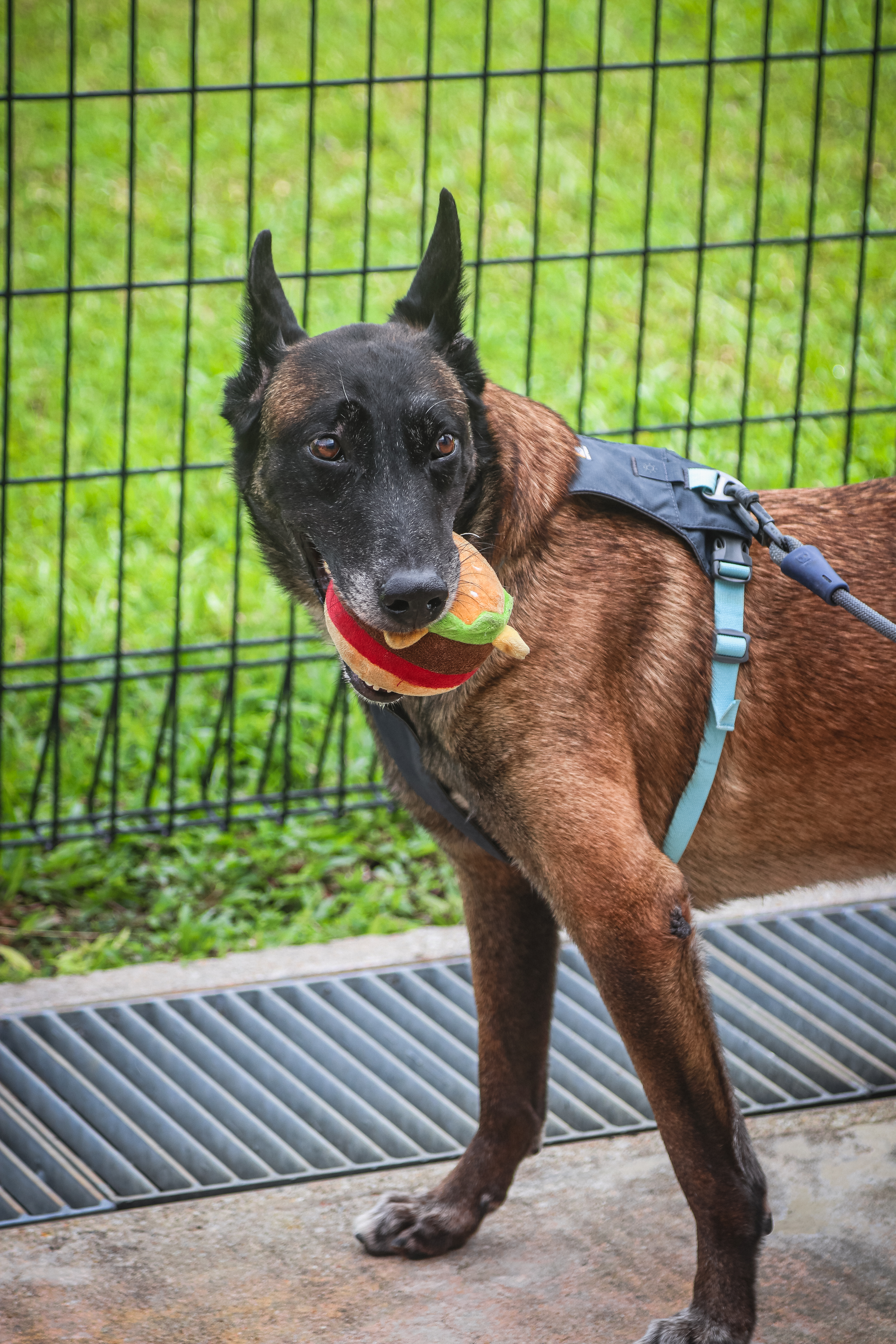 Photo by Thecla Li/Mothership
Four months later, the dog that once kept his distance has become Tan's constant companion.
"He's my walking buddy, my new buddy, and he's literally my shadow now," Tan said.
Old habits die hard
Despite settling into retirement, some habits from Dodger's working days have stuck around.
Having previously served as a narcotics detection dog, Dodger still insists on inspecting Tan's shopping parcels.
“[Dodger] needs to give them a good whiff first, and once it's all clear, he'll go back to his bed, and that's when I can open my parcels,” Tan shared.
Otherwise, Dodger is quite content lounging around the house and keeping Tan company while he works.
The experience has also challenged some of Tan's initial perceptions about police dogs.
Having once worried about their size and whether they would be difficult to handle, Tan has since come to appreciate their affectionate nature.
"They are the most incredible gentle giants you'll ever meet.”
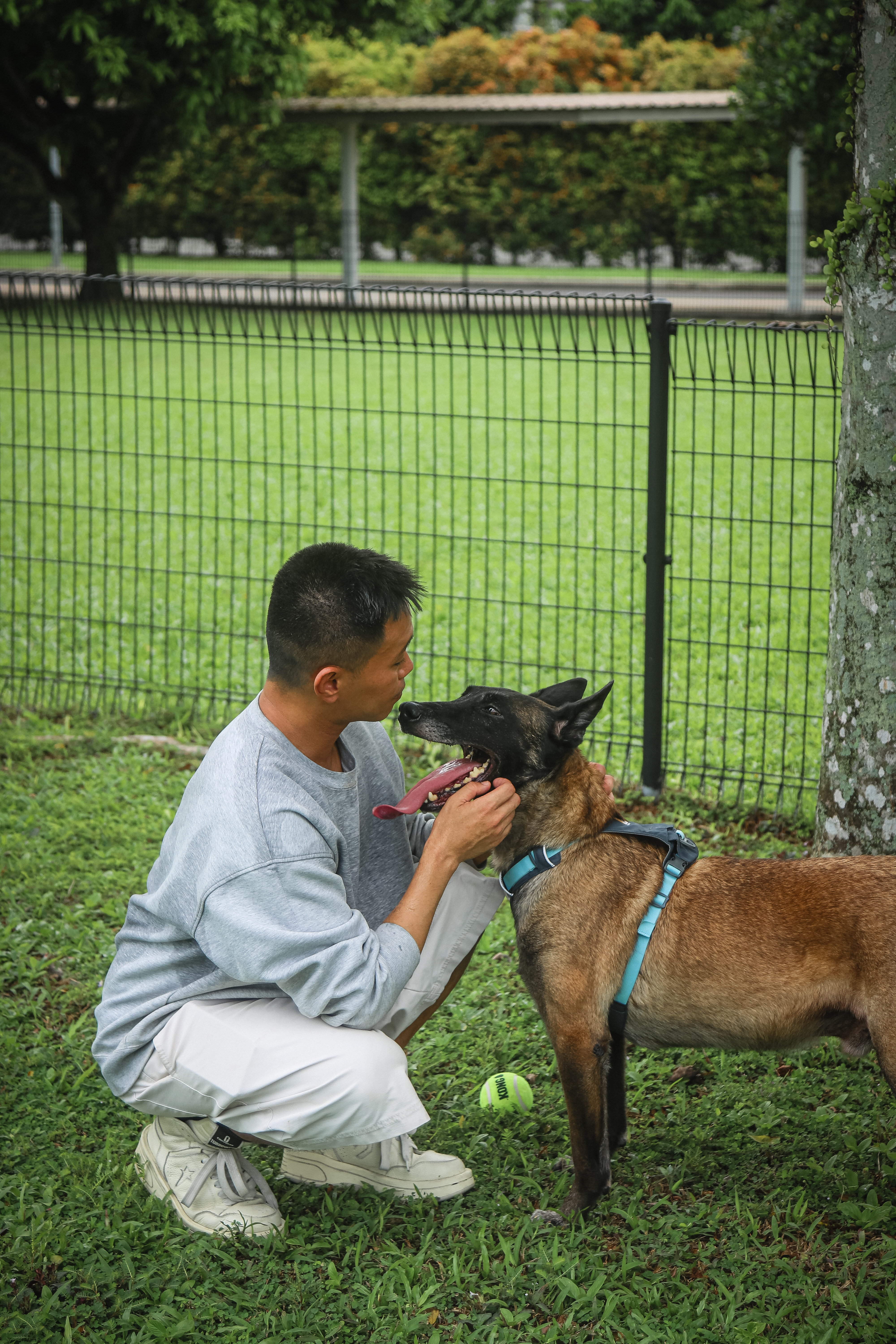 Photo by Thecla Li/Mothership
Schedules
While Dodger has settled into a more relaxed lifestyle, Tan has also had to make adjustments of his own.
His mornings can begin as early as 5:30 am, with walks, meals and other responsibilities to account for.
Rather than impose a strict schedule, Tan said he gradually learnt to recognise his dogs' habits and needs.
"I think the dogs inform me of what I should do instead of me setting a very tight routine," he said.
Finding the right retirement home
While retired police dogs come with years of training, welcoming one home still requires preparation and commitment.
Before adoption, SPF assesses each dog's needs and prepares them for life at home by gradually reducing their operational duties and introducing more relaxed routines. A spokesperson said:
Some dogs adapt quickly while others need more time and reassurance, and their handler's familiarity with their temperament and triggers is valuable here.
We are not trying to erase their training or instincts; we simply want them to enjoy being companions.
Despite having previously cared for a retired K-9, Tan said he still had to undergo a thorough screening process when he expressed interest in adopting Dodger.
According to Tan, the police K-9 Unit assessed his lifestyle, habits and willingness to take on the responsibilities of caring for a retired working dog.
He explained that prospective adopters are matched with suitable dogs based on their profiles, with opportunities to interact with them before adoption.
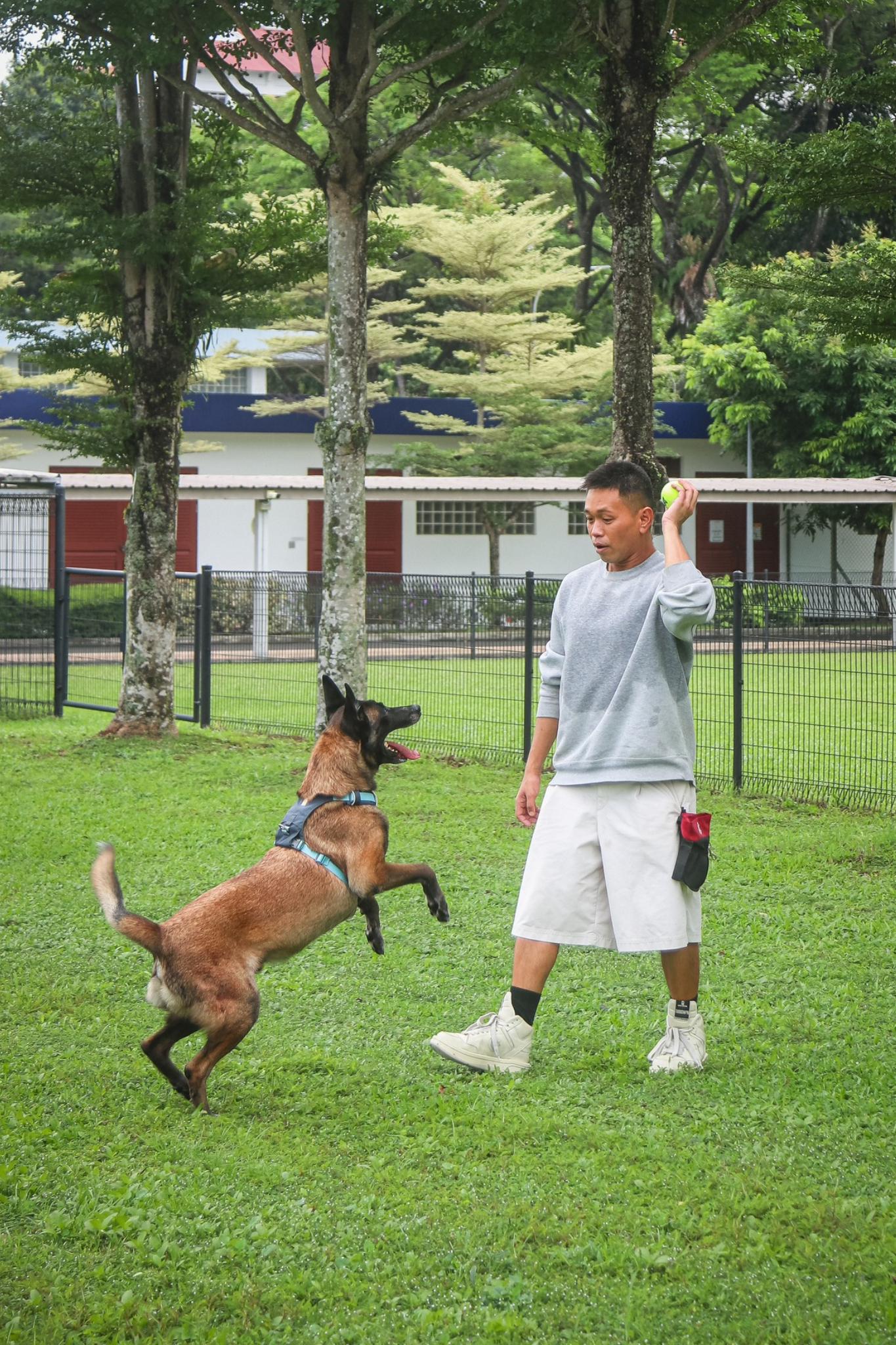 Photo by Thecla Li/Mothership
Shue also highlighted the importance of considering the adopter's living arrangements, dog-handling experience and ability to meet the dog's exercise requirements.
“Having a place to stay is one thing, but they also need to cater [for] the environment, the training, the movement, the exercises that the dog needs,” Shue explained.
Tan similarly encouraged prospective adopters to consider the time, healthcare costs, and long-term responsibilities before bringing a retired K-9 home.
Adopting a pet is a heavy responsibility, but bringing home a retired K-9 has the added satisfaction of helping these hardworking officers close a chapter of their lives spent in service to the country, a choice both men hope more people will take up.
"We are happy to see them go home for a second life," Shue said.
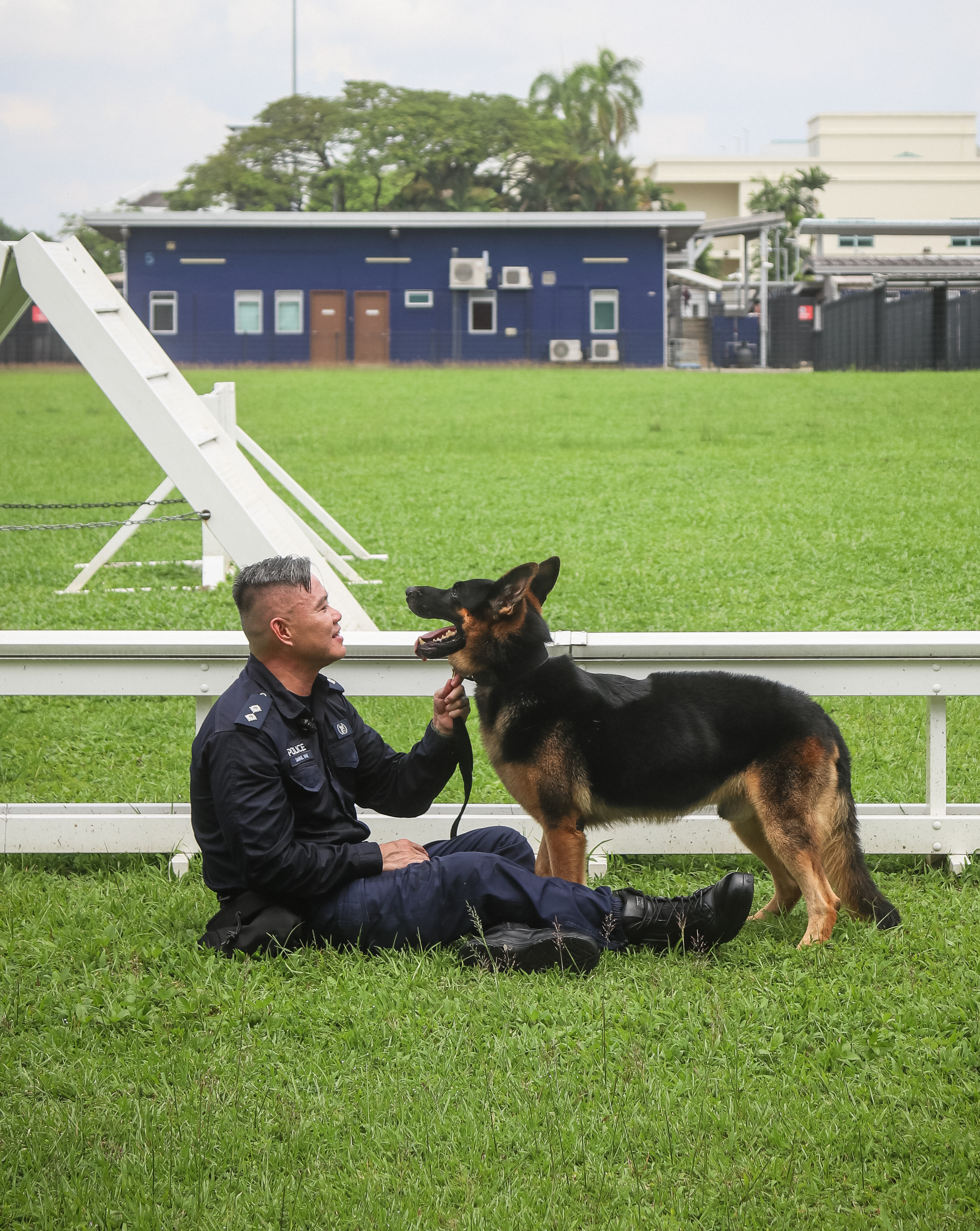 Photo by Thecla Li/Mothership