



Abroad


Piped natural gas imported from Indonesia is for domestic use, not export, METI clarifies after Indonesia minister's comments
Liquefied natural gas (LNG) is separate from the Piped Natural Gas (PNG) that were subject to the gas cuts.
October 30, 2026, 09:55 PM
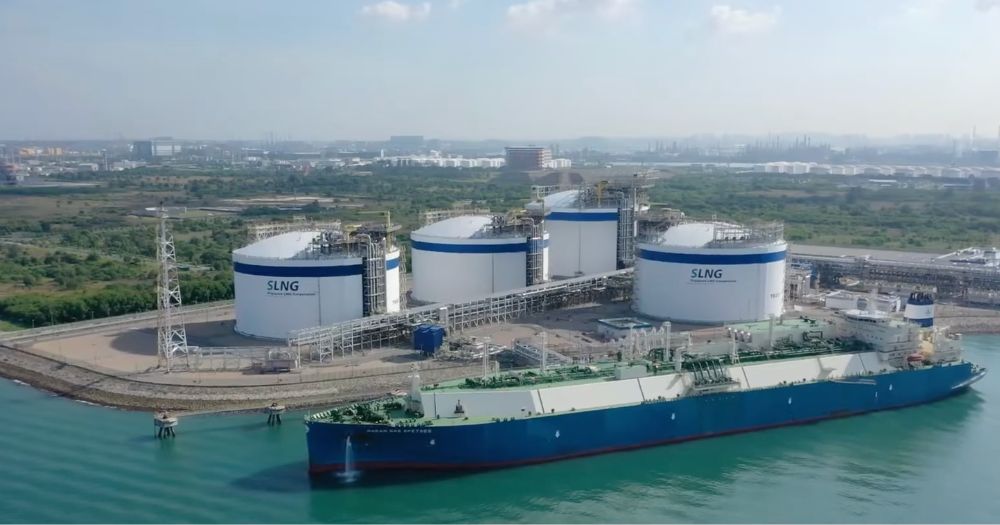
Singapore LNG Corporation/YouTube


A spokesperson for the Ministry of Energy, Trade and Industry (METI) said "piped natural gas imported from Indonesia is for domestic use, and not for export", in response to Mothership's queries.
The statement comes after Indonesian Coordinating Minister for Downstreaming and Energy Transition Bahlil Lahadalia claimed, without providing evidence, claimed that Singapore resold some of the liquefied natural gas (LNG) it imported from Indonesia to other countries rather than using it for domestic consumption, reported The Straits Times (ST).
Bahlil also doubled down and said that his country's decision to cut gas exports to Singapore does not violate contracts.
What he said
Speaking to Indonesian reporters, Bahlil was quoted as saying: "I believe that not all of the 148 cargoes we send are used for Singapore’s own needs, but some are traded and subsequently exported to other countries."
Bahlil, who is also Minister of Energy and Mineral Resources and chairman of the Golkar Party, did not specify when the cargoes were shipped nor provide any evidence to substantiate his allegations.
The 148 cargoes refer to LNG transported by sea, which is separate from the Piped Natural Gas (PNG) from Indonesia's Natuna and Sumatra gas fields that were subject to supply cuts.
LNG "usually moves from source to destination country directly"
Bahlil's statements come amid calls for the easing of bilateral tensions over energy supplies and transboundary haze.
The METI spokesperson noted that Singapore is an international trading hub, including for LNG, with "more than 50 Singapore-based companies that buy, market, and trade LNG sourced from markets around the world, including Indonesia".
The spokesperson added that these companies' top source markets include the U.S., Australia and Malaysia.
"While Singapore-based traders make the commercial decisions relating to the cargo, the actual LNG cargo usually moves from source to destination country directly and does not physically pass through Singapore."
Transactions regarding LNG trading and re-exporting are subject to supply agreement terms.
SKK Migas, Indonesia's upstream oil and gas regulator, first broke the news at an energy industry awards ceremony in Jakarta, stating that 31 billion British thermal units per day (BBTUD) were to be cut.
Singapore's Energy Market Authority (EMA) then confirmed that the actual reduction was around 17 billion British thermal units per day over 18 days, which was less than 2 per cent of Singapore's daily gas demand.
Previous comments
Prime Minister Lawrence Wong had previously said on Oct. 25 that Singapore expected all parties to "honour their commitments" under commercial contracts, two days after Indonesia announced gas export cuts.
On Oct. 26, Bahlil directly responded to PM Wong's remarks, stating that the gas supplied to Singapore meets minimum contractual levels.
"Our nation is a nation that honours contracts, rules. So don't teach Indonesia on how to honour contracts."
According to Indonesian media outlet Kompas, on Oct. 28, Bahlil explained that the total gas export volume from Indonesia to Singapore stood at 409.5 million standard cubic feet per day (MMSCFD), with the cut being 31 MMSCFD.
Bahlil claimed that this still exceeds the minimum threshold stipulated in the contract.