


 June 20, 2023, 12:02 PM

Follow us on Telegram for the latest updates: https://t.me/mothershipsg
Singapore does not provide subsidies to fossil fuel exploration, extraction or consumption, a spokesperson from the National Climate Change Secretariat (NCCS) said in response to queries about findings in the latest Climate Action Tracker (CAT) briefing.
According to the CAT brief, Singapore is one among many countries who still "provide much more in subsidies to fossil fuel production compared to renewable energy subsidies".
The briefing, entitled "Countdown to COP28: time for world to focus on oil and gas phase-out, renewables target, not distractions like [carbon capture and storage]", was published on Jun. 8.
CAT is a collaborative project between two German-based research organisations, Climate Analytics and NewClimate Institute, which tracks government climate action and measures them against the 2015 Paris Agreement goals.
Subsidies for fossil fuel and renewables
The CAT brief centres on the need to end investments in oil and gas production and technologies.
The brief is released with a view towards the upcoming 28th Conference of the Parties to the UN Framework on Climate Change (COP28).
"This briefing assesses recent action from national governments to start phasing out oil and gas production and support renewable electricity," CAT wrote on its website.
One section in the brief assesses whether countries are "[creating] favourable conditions for renewable electricity".
According to CAT, the type and amount of policy support for renewables depends heavily on the "maturity of the market" and "country-specific circumstances".
"Prices for renewable electricity technologies and battery storage have decreased substantially over the last decade, and in many cases are already cost-competitive," it noted.
However, CAT asserted that this is not the case in all countries, and "subsidies for fossil fuels or high financing costs" may still result in "low financial attractiveness" of renewable electricity investments.
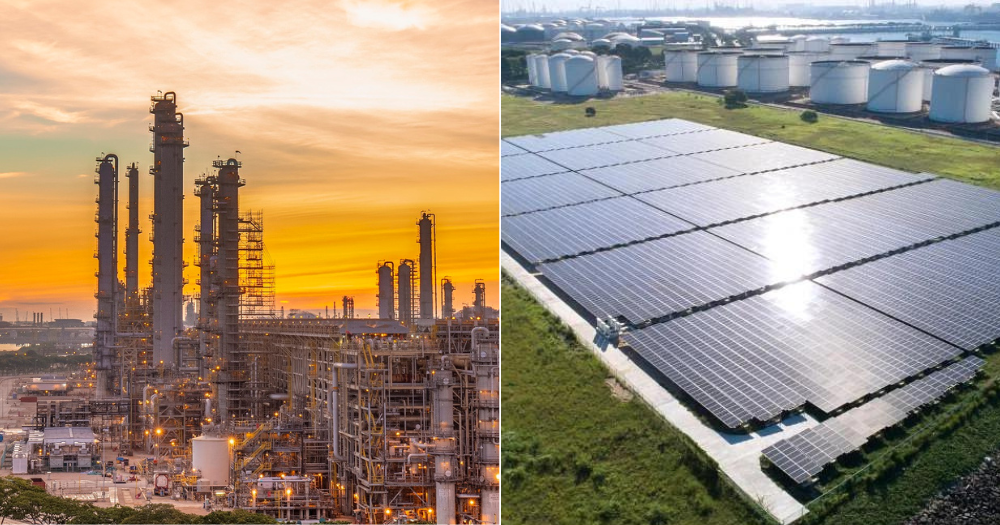
CAT listed Turkey, India and Singapore as countries that provide more subsidies for fossil fuel production.
"Many governments still provide much more in subsidies to fossil fuel production compared to renewable energy subsidies, distorting the market and reducing the effectiveness of policies to support renewable energies – this is the case in Turkey, India, Singapore and many more countries."
NCCS's response
Responding to queries from Mothership, a spokesperson for the National Climate Change Secretariat (NCCS) pointed out that Singapore "neither subsidises the exploration or extraction of fossil fuel, nor the consumption of fossil fuel or electricity".
In addition, the spokesperson highlighted that Singapore has "taken bold steps to right price carbon and reflect its externalities for both businesses and individuals".
The spokesperson highlighted the country's carbon emissions-limiting efforts in the form of carbon taxes.
"Singapore was the first country in Southeast Asia to introduce a carbon tax, in 2019. The carbon tax applies to energy producers and covers around 80% of Singapore’s greenhouse gas emissions.
To support our raised climate ambition and 2050 net zero target, the carbon tax will be raised to S$25/tCO2e (US$19/tCO2e) in 2024 and 2025, and S$45/tCO2e (US$33/tCO2e) in 2026 and 2027, with a view to reaching S$50-80/tCO2e (US$37-60/tCO2e) by 2030."
The spokesperson also mentioned that Singapore has "very limited options for renewable energy", and relies on imports to meet all its energy needs as a "small, resource-constrained country".
Nevertheless, the spokesperson shared that Singapore will continue create favourable conditions for renewable energy, in line with Singapore’s 2050 net-zero targets.
Some of these efforts include:
- Working with partners to develop a regional power grid for renewable energy imports;
- Deploying at least 2 GWp of solar energy by 2030; and
- Developing hydrogen as a major decarbonisation pathway for the energy sector as part of our National Hydrogen Strategy. In December 2022, Singapore also launched an Expression of Interest for a low-carbon ammonia (a hydrogen carrier) power generation and bunkering solution in Singapore."
COP28 presidency controversy
COP28 is due to be held in the United Arab Emirates (UAE) from Nov. 30 to Dec. 12, 2023.
However, the appointment of Sultan Al Jaber, Group CEO of Abu Dhabi National Oil Company, as president of the climate conference has sparked controversy.
"COP28 would ideally be the stage for a historic agreement on the rapid, just, and well managed transition away from all fossil fuels – although this is looking increasingly unlikely, with the current COP presidency promoting the expansion of oil and gas," CAT commented in the introduction of the Jun. 8 brief.
Top image via JTC


If you like what you read, follow us on Facebook, Instagram, Twitter and Telegram to get the latest updates.